Continuity Test
Confirms whether a path exists between two points — fast for finding breaks, useless for finding resistance.
What this test tells you
When to use it
- A circuit is completely dead and you suspect a break
- Identifying which pin at one connector matches which pin at another
- Checking a repaired or spliced section
- Hunting an intermittent by wiggling the harness while watching the meter
Safety
- The circuit must be dead — disconnect the battery or unplug both ends
- Never continuity test a live circuit
- Take care not to spread connector terminals with oversized probes
Vehicle setup
- Both ends of the wire disconnected so nothing else is in parallel
- Battery disconnected where the circuit cannot otherwise be isolated
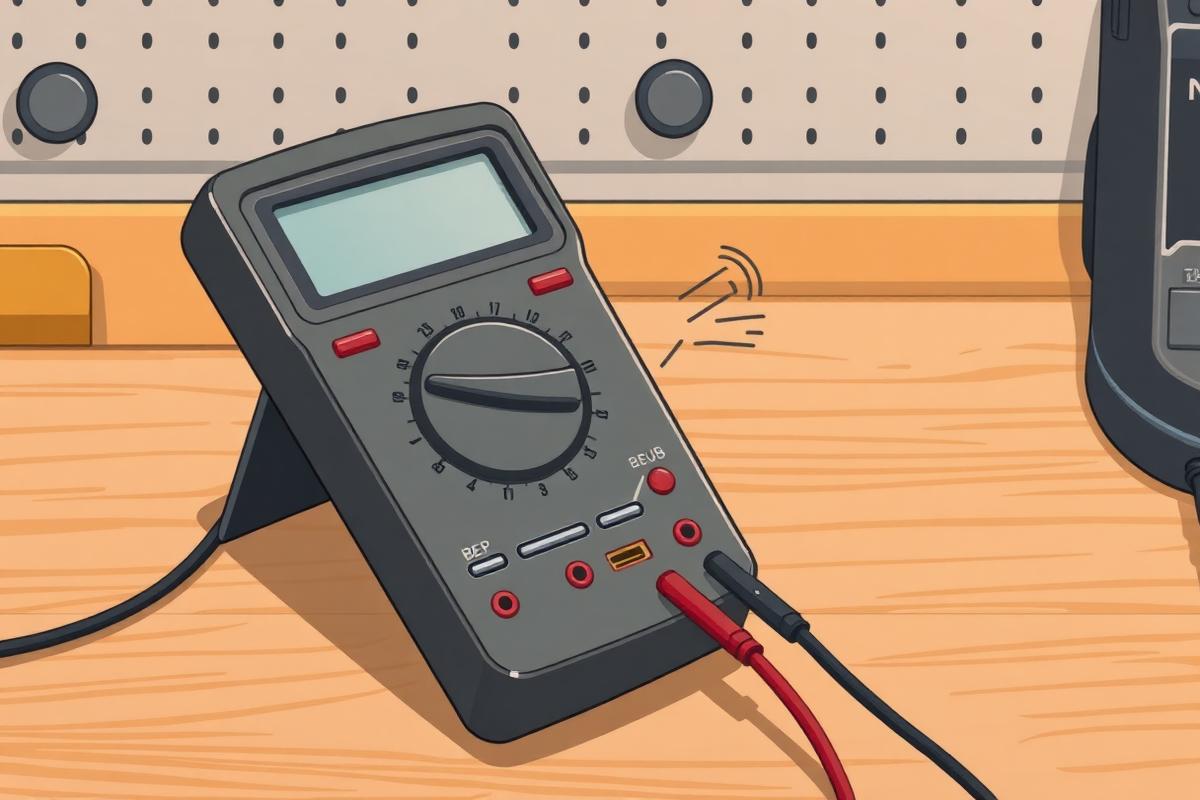
Meter setup
- Tool
- Digital multimeter
- Function
- Continuity (audible) or ohms
- Range
- Auto range
- Sockets
- Red in VΩ, black in COM
Practise it — interactive simulation
Continuity test
Prove a path is unbroken — supply isolated, component disconnected.
- GND — Battery → BPOS
- BPOS — Fuse 15 A → FOUT
- FOUT — Switch → SWO
- SWO — Feed wire to lamp → LP
- LP — Lamp 21 W → LG
- LG — Earth wire → GND
Loading the interactive circuit…
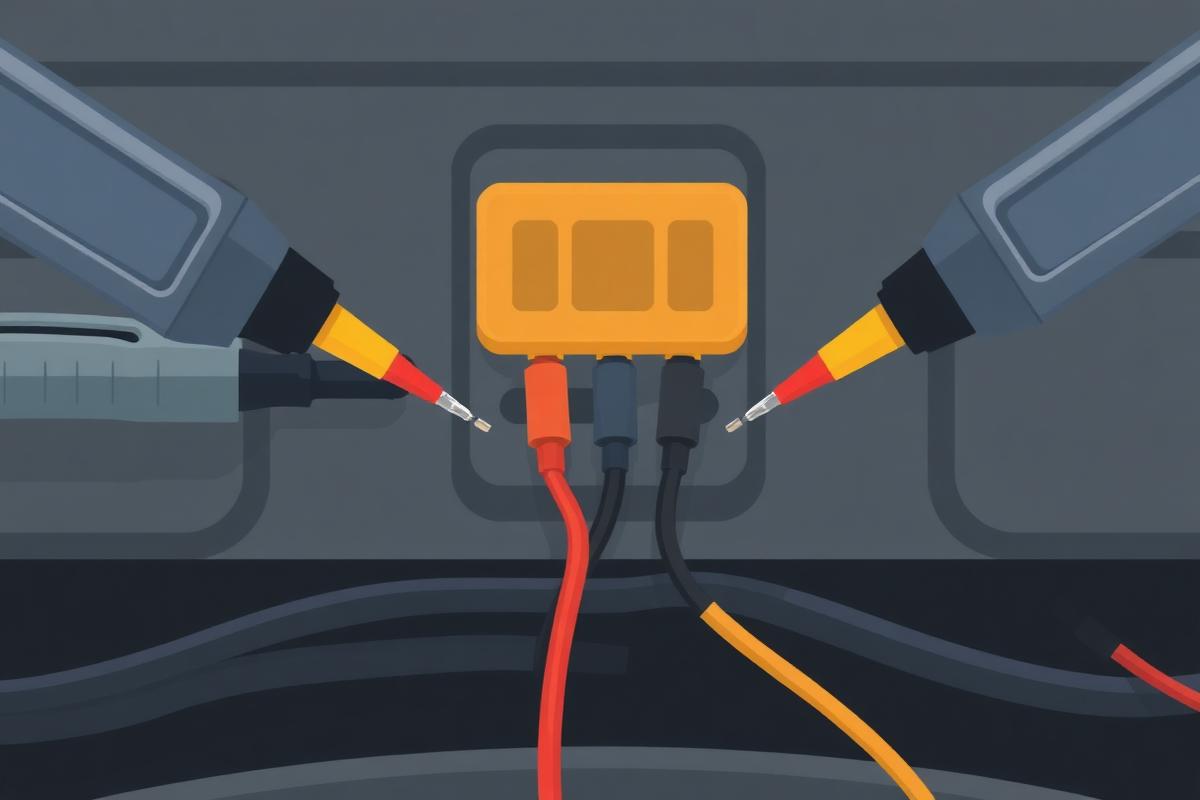
RED Pin at connector A
BLACK Matching pin at connector B
Use a long jumper lead when the two ends are far apart
RED Either end of the wire
BLACK A known good ground
Checks for an unintended short to ground on the same wire
Step by step
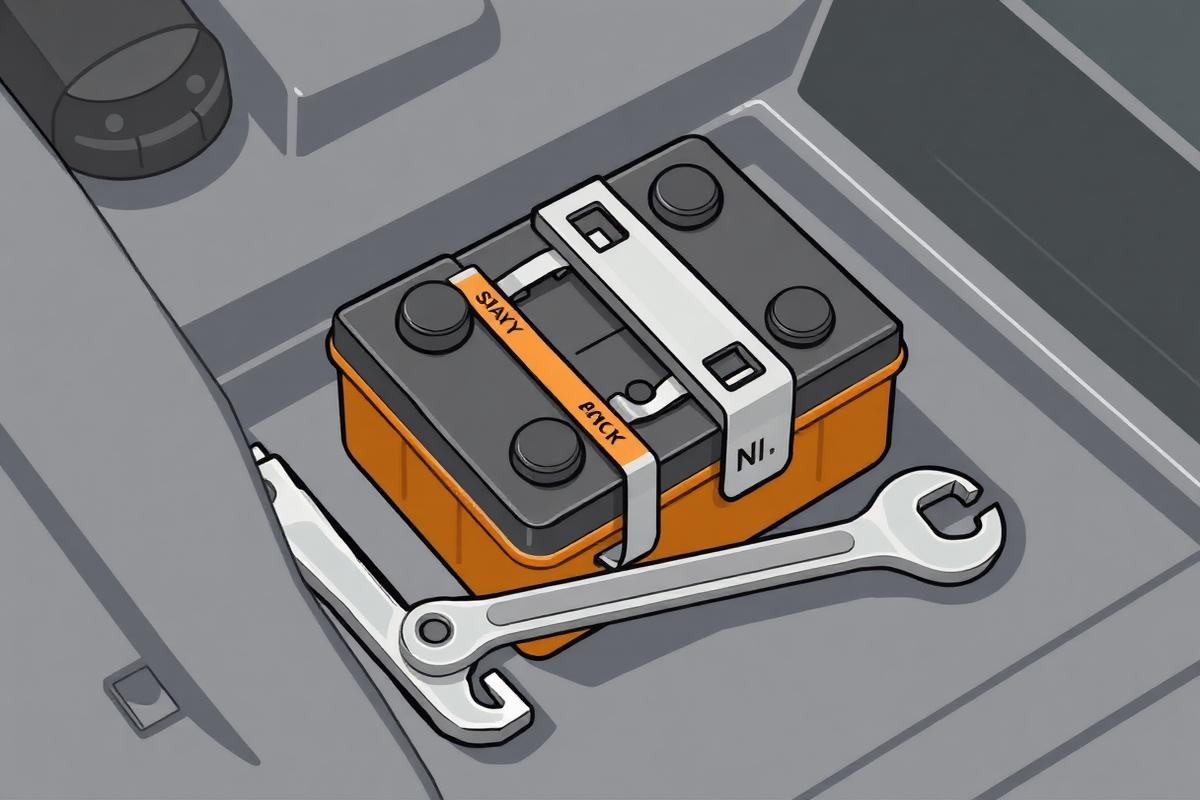
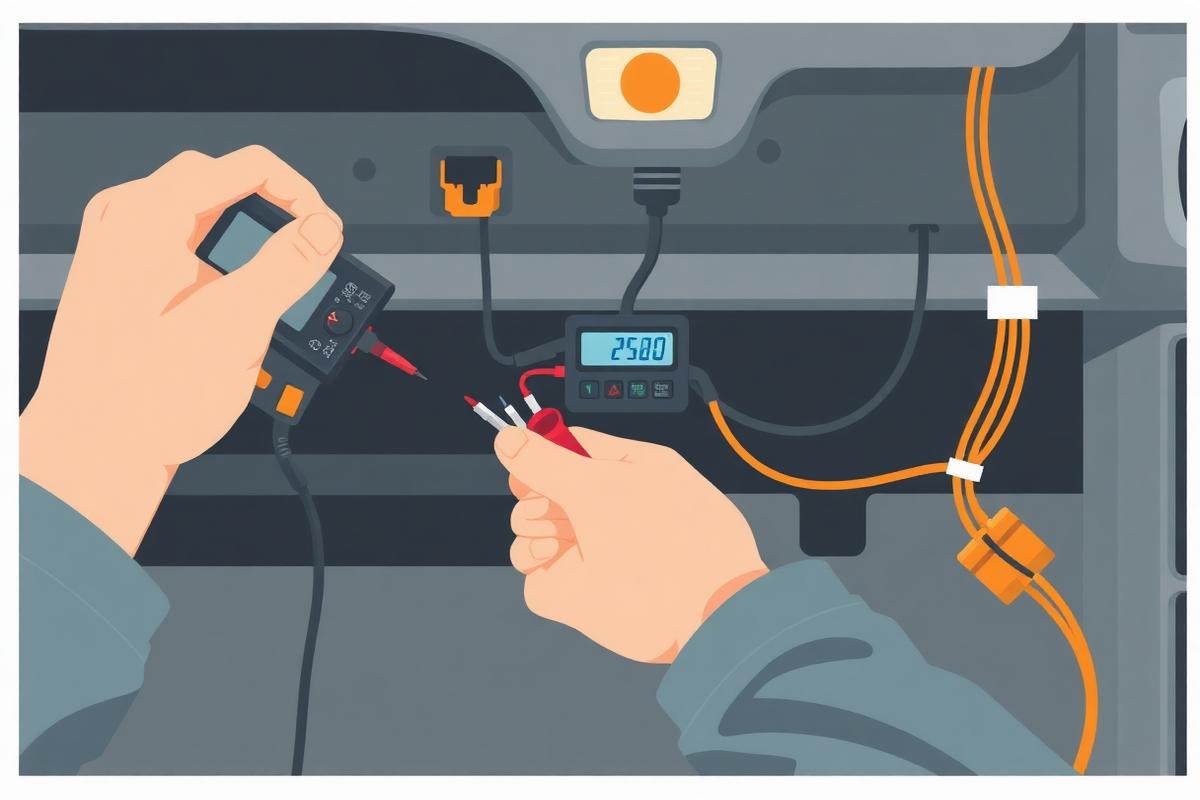
Step 1 · Kill the power
Disconnect the battery and unplug both ends of the circuit you are testing so nothing can feed it from another path.
Live voltage on a continuity test damages meters and gives false passes.
Procedure
- Short the probes together and confirm the meter beeps and reads near zero
- Disconnect both ends of the wire under test
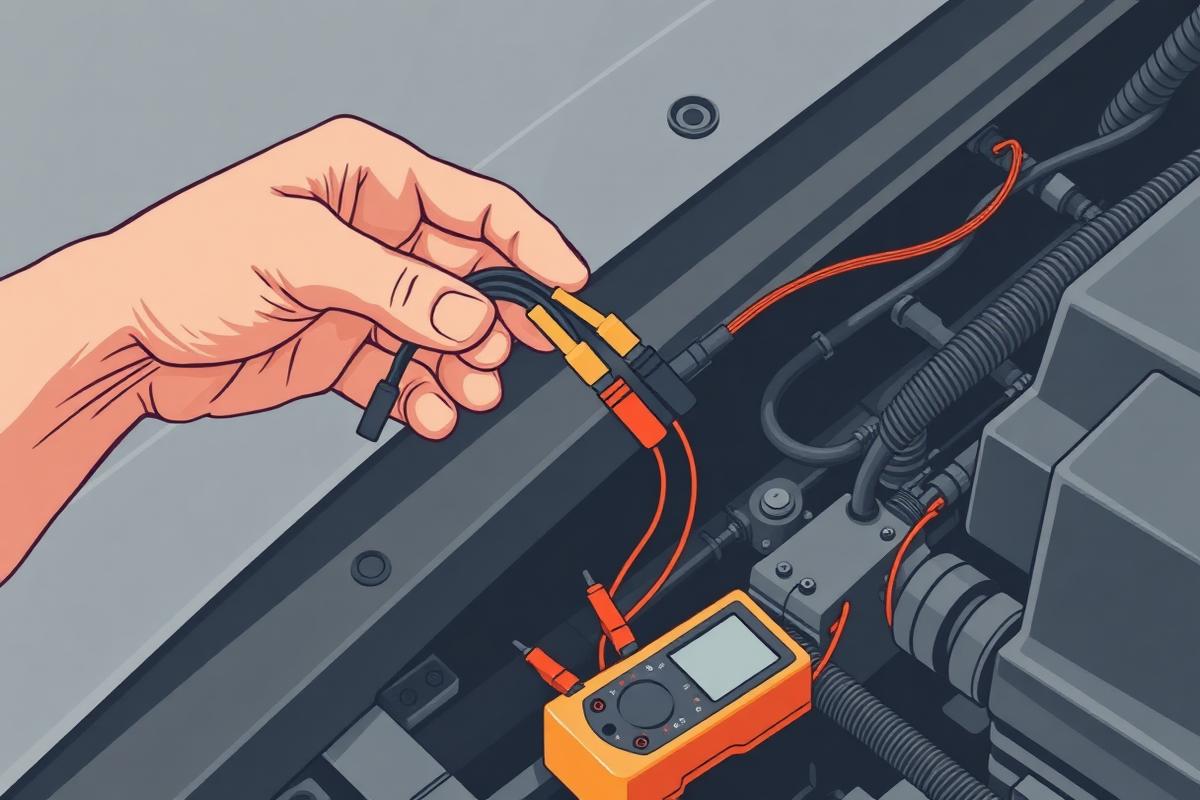
- Probe pin to pin and read the value, not just the beep
- Wiggle and flex the harness while watching for the reading to break
- Check the same wire to ground and to its neighbours to rule out shorts
Normal result
Under about 0.5 Ω for a typical vehicle wire, including lead resistance. The meter beeps.
Fault result
OL or infinite means the wire is broken. A reading that flickers while flexing means an intermittent break.
Interpretation
IfReads near zero and stays there while flexed
ThenThe wire is intact
NextMove on: voltage drop test it under load if the circuit still misbehaves
IfReads OL
ThenThe wire is open somewhere along its length
NextHalve the run to locate the break
IfReads a few ohms
ThenThe path exists but is compromised — corrosion or partial strand breakage
NextConfirm with a voltage drop test under load, then repair
IfBeeps to ground or to a neighbouring wire
ThenInsulation damage causing a short
NextLocate and repair the chafe point
Common mistakes
- Trusting the beep on a circuit that has a few ohms of corrosion — the meter beeps well above a healthy value
- Leaving one end connected so the meter reads through the rest of the circuit
- Continuity testing where a voltage drop test is required, and passing a bad joint
- Damaging small terminals with large probes