Parasitic Drain Test
Measures the current the vehicle draws with everything switched off, to find what is flattening the battery overnight.
What this test tells you
When to use it
- Battery goes flat while the vehicle is parked
- Battery repeatedly needs jump starting or charging
- After an accessory, alarm or tracker has been fitted
Safety
- Never crank or switch on a heavy load while the meter is in series on the 10 A range — it will blow the meter fuse instantly
- Watch for doors locking with keys inside once the vehicle sleeps
- Keep the meter leads clear of moving parts and the bonnet catch
Vehicle setup
- Battery fully charged and known good
- Ignition off, key well away from the vehicle
- Doors closed and latched — use the door latch striker or a magnet trick rather than leaving a door open
- Bonnet switch closed if fitted
- Allow the vehicle to sleep: many modules take 20 to 60 minutes to shut down
Meter setup
- Tool
- Digital multimeter
- Function
- DC amps
- Range
- Start on the 10 A range, then drop to mA once the reading settles low
- Sockets
- Red in the 10 A socket, black in COM
Practise it — interactive simulation
Parasitic drain
Break the battery circuit and put the meter in series to catch what stays awake.
- GND — Battery → BPOS
- BPOS — Battery cable clamp → FEED
- FEED — Main supply cable → FB
- FB — Main fuse → BUS
- BUS — Vehicle modules → RTN
- RTN — Body earth → GND
Loading the interactive circuit…
RED Battery negative post
BLACK Disconnected negative cable clamp
The meter is in series — all vehicle current now flows through it
RED Around one battery cable only (clamp method)
BLACK n/a
A low-current amp clamp avoids disconnecting the battery and losing module sleep state
Step by step



Step 1 · Let the vehicle go to sleep
Close the doors with the windows down, key out and everything switched off. Modules can take 20–45 minutes to shut down properly.
Testing before the modules sleep gives a false high reading and a wrongly condemned part.
Procedure
- Charge and test the battery first — a faulty battery mimics a drain
- Fit a memory saver if module reprogramming is a risk, or use an amp clamp instead
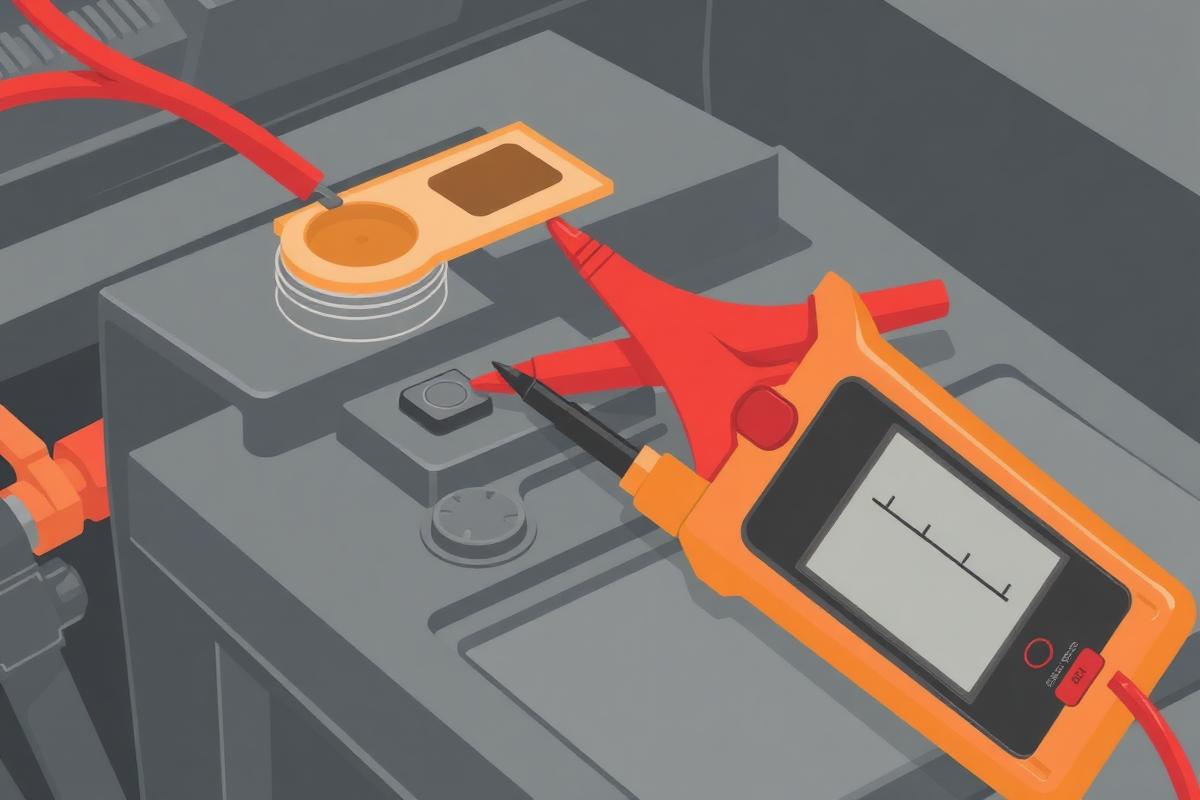
- Disconnect the negative cable and connect the meter between the post and the cable, in series
- Wait for the vehicle to go to sleep, watching the reading fall in steps as modules shut down
- Record the settled current
- If it is above specification, pull fuses one at a time, watching for the reading to collapse
- When the reading drops, that circuit holds the drain — trace the components on it
- Refit every fuse afterwards and clear any codes set by the disconnection
Normal result
Typically 20 to 50 mA on a modern vehicle once fully asleep. Vehicles with telematics, tracking or alarm systems can legitimately sit a little higher — always check the manufacturer's figure.
Fault result
A settled draw well above the manufacturer's figure, or a draw that never settles because a module refuses to sleep.
Interpretation
IfCurrent settles within specification
ThenNo parasitic drain — the battery, charging system or usage pattern is the problem
NextMove to battery capacity testing and charging system output
IfCurrent stays high and never falls
ThenA module is being kept awake, often by a switch, door latch or network request
NextCheck door, boot and bonnet switches, then look for a module holding the network awake
IfReading collapses when one fuse is pulled
ThenThe drain is on that circuit
NextTest the components fed by that fuse individually
IfReading only rises after a period of standing
ThenSomething is waking the vehicle intermittently
NextLeave the meter connected and monitor over a longer period
Common mistakes
- Measuring before the vehicle has gone to sleep, and condemning a normal wake-up current
- Breaking the meter connection while pulling fuses — the modules wake and the count restarts
- Leaving the meter on the 10 A socket and then cranking the engine
- Opening a door mid-test
- Testing with a battery that is already faulty