Battery Resting Voltage Test
The baseline check: state of charge measured at the posts after the battery has rested.
What this test tells you
When to use it
- The first measurement on any electrical complaint
- Before any other test, so later readings can be trusted
- After charging, to confirm the charge was accepted
Safety
- Batteries vent hydrogen — no sparks, flames or smoking
- Wear eye protection when working over a battery
- Do not lean tools across the terminals
Vehicle setup
- Ignition off, everything switched off
- Rested at least one hour after charging or driving to shed surface charge
- If you cannot wait, switch on the headlights for 30 seconds and then retest
Meter setup
- Tool
- Digital multimeter
- Function
- DC volts
- Range
- Auto range or 20 V DC
- Sockets
- Red in VΩ, black in COM
Practise it — interactive simulation
Battery resting voltage
Measure state of charge with the vehicle asleep.
- GND — Battery → BPOS
- BPOS — Positive clamp → PCL
- PCL — Vehicle loads → L1
- L1 — Sidelights → L2
- L2 — Body earth → NCL
- NCL — Negative clamp → GND
Loading the interactive circuit…
RED Battery positive post — the lead post itself
BLACK Battery negative post
Probing the clamps instead of the posts hides a bad clamp connection
Step by step


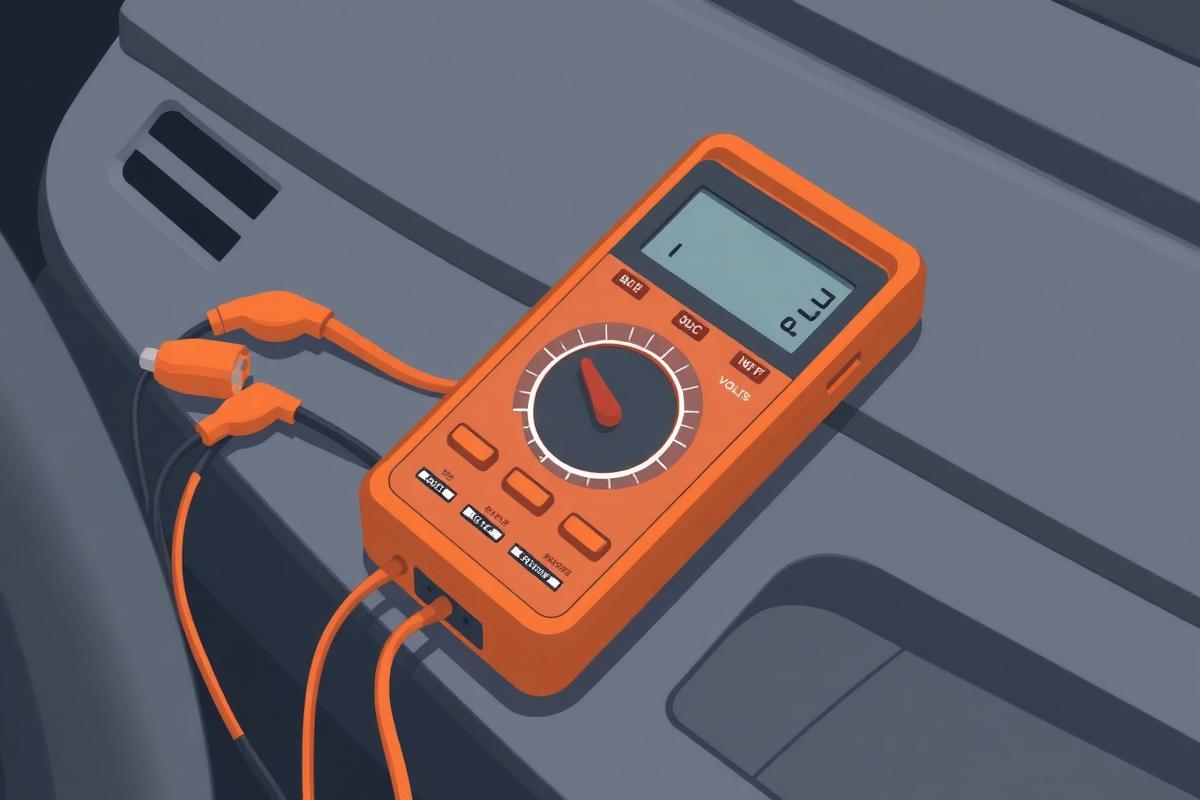

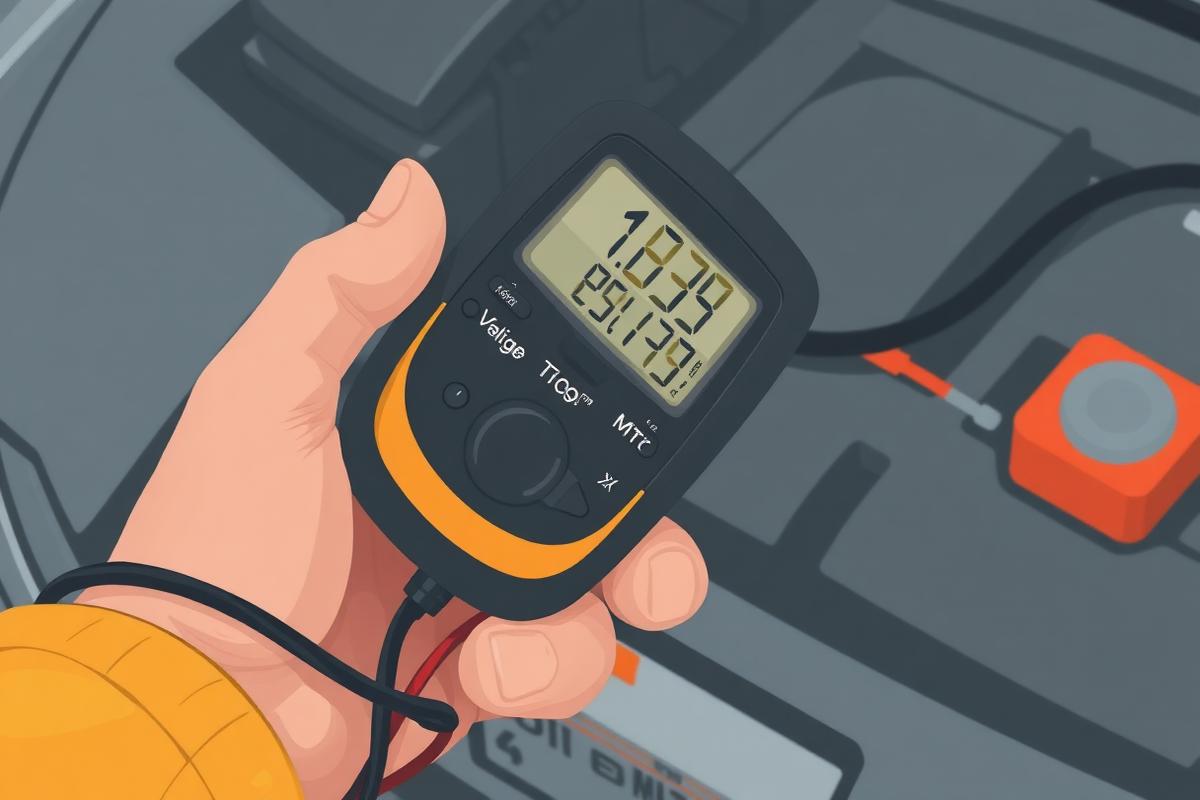
Step 1 · Rest the battery
Engine off for at least an hour, or longer after a drive. Surface charge from the alternator flatters the reading.
Procedure
- Ensure the vehicle has been off long enough to rest
- Clean any obvious corrosion so the probes make metal contact
- Touch the red probe to the positive post and black to the negative post
- Record the reading to two decimal places
- Repeat at the clamps: any difference between post and clamp is a bad connection
Normal result
Approximately 12.6 to 12.8 V for a fully charged flooded lead-acid battery. AGM batteries typically rest slightly higher, around 12.8 to 13.0 V.
Fault result
12.4 V is roughly 75% charged, 12.2 V roughly 50%, 12.0 V roughly 25%, and below 12.0 V is discharged. Around 10.5 V usually indicates a shorted cell.
Interpretation
If12.6 V or above
ThenFully charged — proceed to load or capacity testing
NextContinue with cranking voltage and charging system checks
If12.2 to 12.4 V
ThenPartially discharged — a charging fault or a drain is likely
NextCharge fully, then test for parasitic drain and check charging output
IfAround 10.5 V and will not rise on charge
ThenA cell has shorted internally
NextReplace the battery
IfPost reads correctly but clamp reads lower
ThenResistance in the clamp connection
NextClean and retighten the clamp, then retest
Common mistakes
- Testing immediately after charging and being fooled by surface charge
- Probing the clamps only
- Concluding a battery is good from voltage alone — voltage is charge level, not capacity
- Ignoring a small difference between post and clamp readings