Battery Load Test
Applies a controlled load to prove the battery can deliver current, not just hold voltage.
What this test tells you
When to use it
- Resting voltage looks acceptable but the engine cranks slowly
- A vehicle that starts on some mornings and not others
- Before condemning a starter motor or alternator
- Confirming a warranty decision on a battery under two years old
Safety
- Batteries vent hydrogen — no smoking, no sparks, no naked flame near the battery
- Wear eye protection; electrolyte is acid
- A load tester gets hot in use — follow its duty cycle and let it cool between tests
- Never load test a battery with a visibly cracked case, frozen electrolyte or a swollen side
Vehicle setup
- Battery at 12.4 V or higher before you start — charge it first if it is below that
- Remove surface charge: headlights on for two minutes, then off and settle for one minute
- Ignition off, keys out, bonnet propped securely
Meter setup
- Tool
- Battery load tester (carbon pile) with a digital multimeter as a second opinion
- Function
- DC volts on the meter; the tester provides the load
- Range
- Auto range, or 20 V DC
- Sockets
- Red in VΩ, black in COM
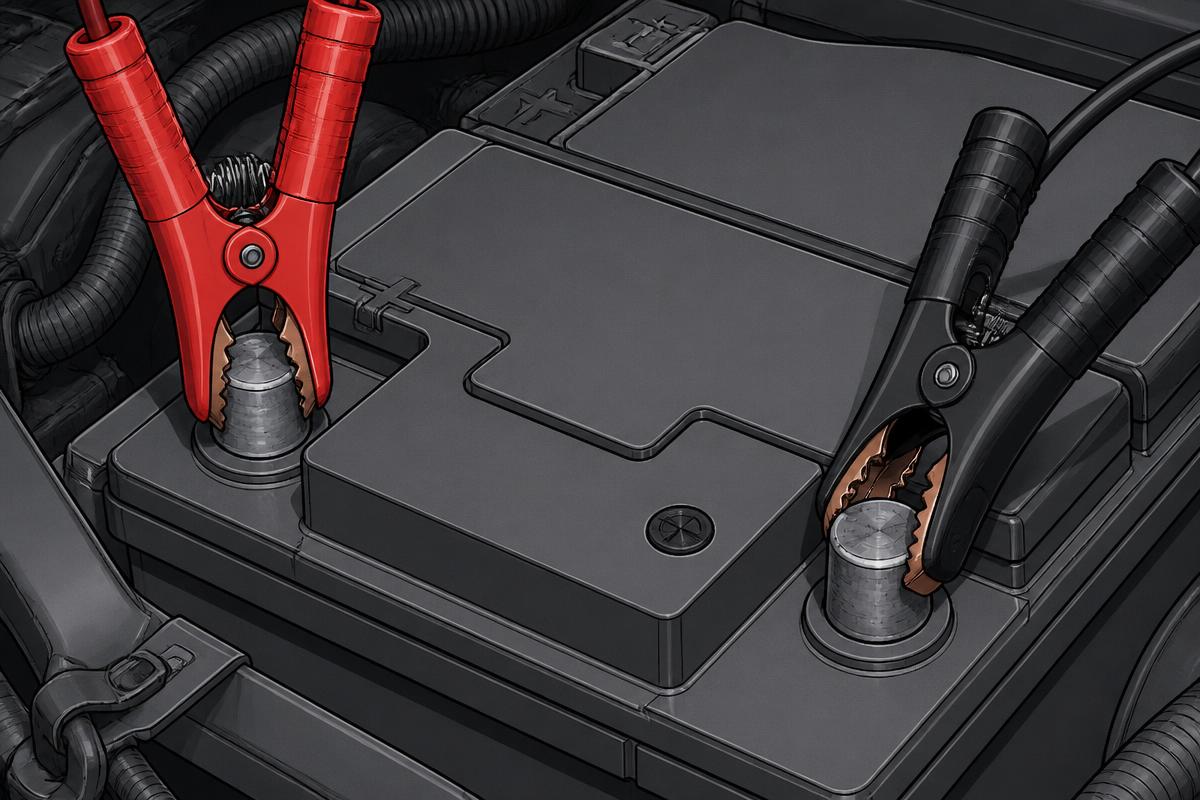
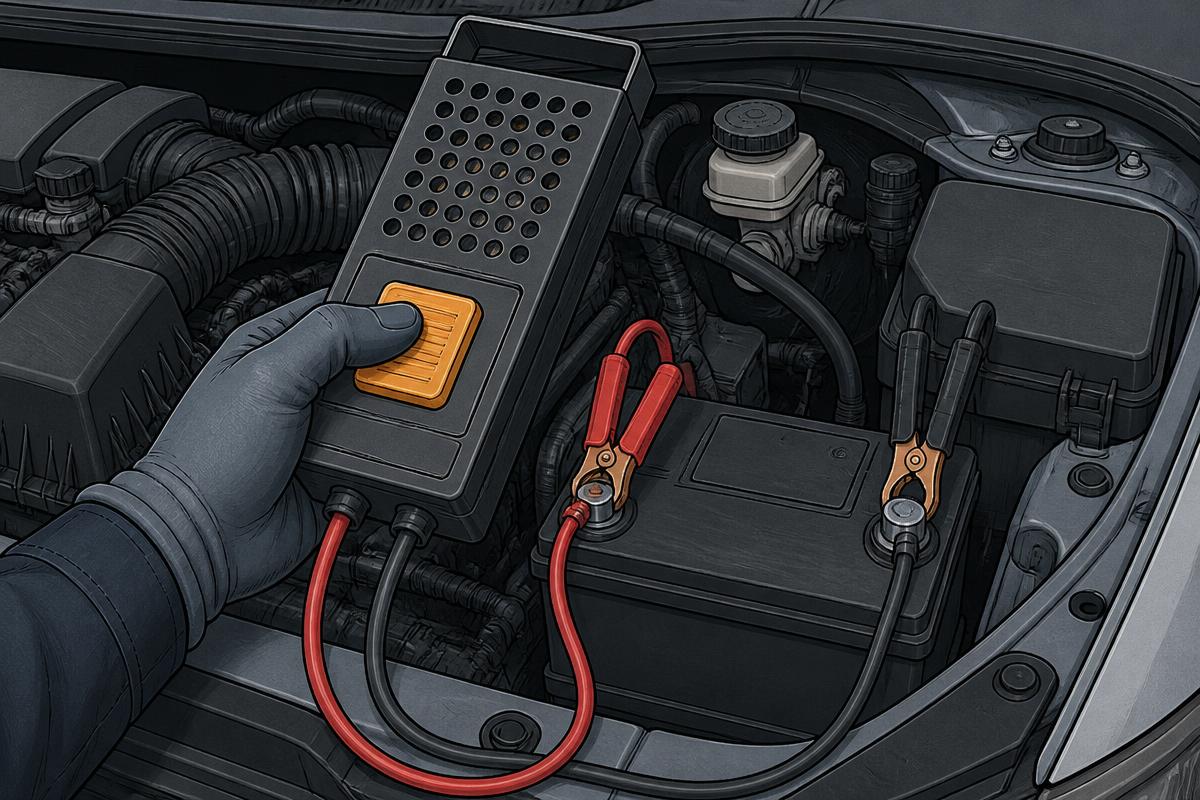
RED Tester's red clamp onto the bare lead positive post
BLACK Tester's black clamp onto the bare lead negative post
Clamp the posts, not the cable clamps — a bad clamp joint will otherwise be blamed on the battery
RED Meter red probe on the positive post
BLACK Meter black probe on the negative post
Watch the meter during the load if you want an independent reading
Step by step
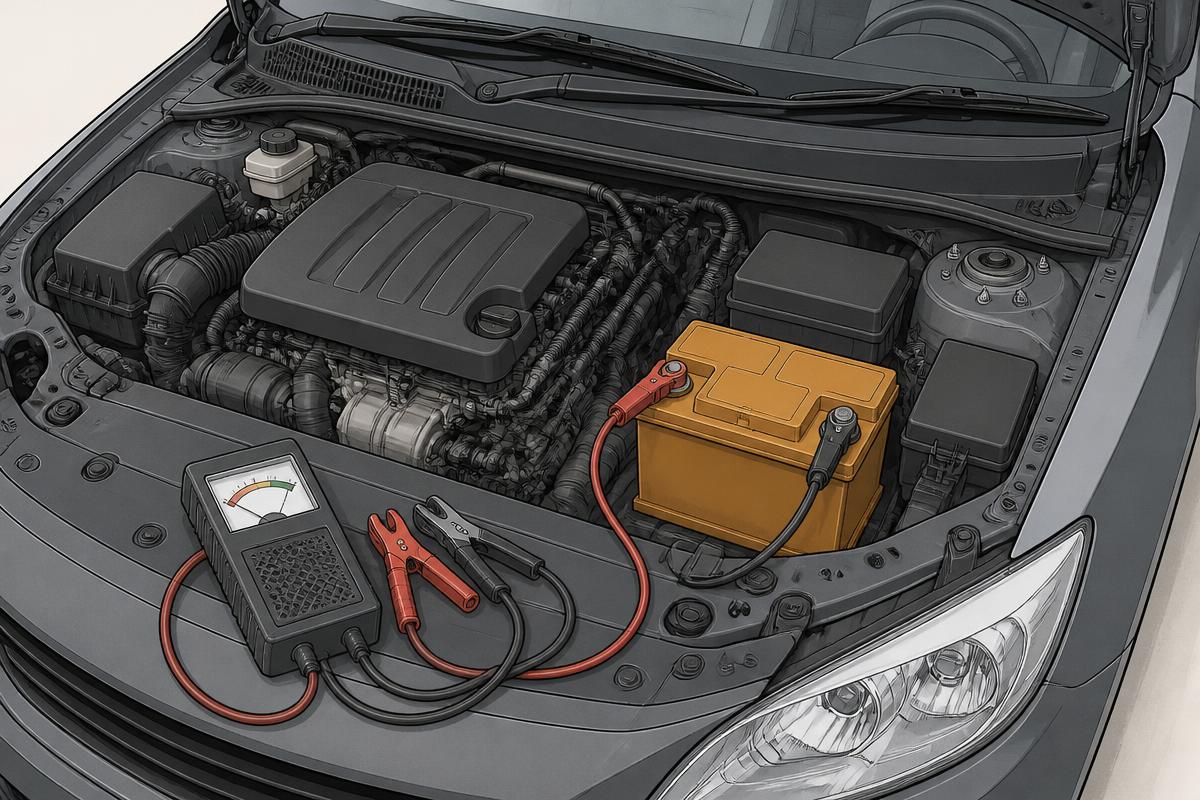
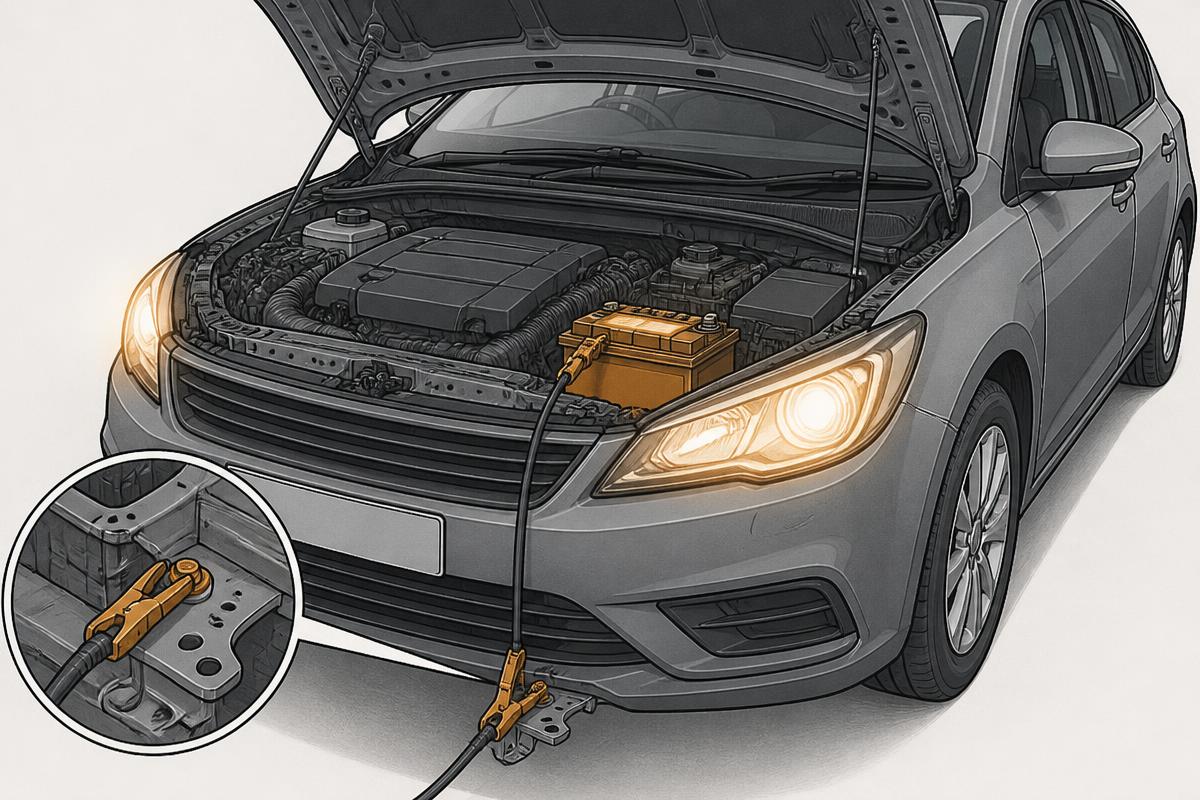
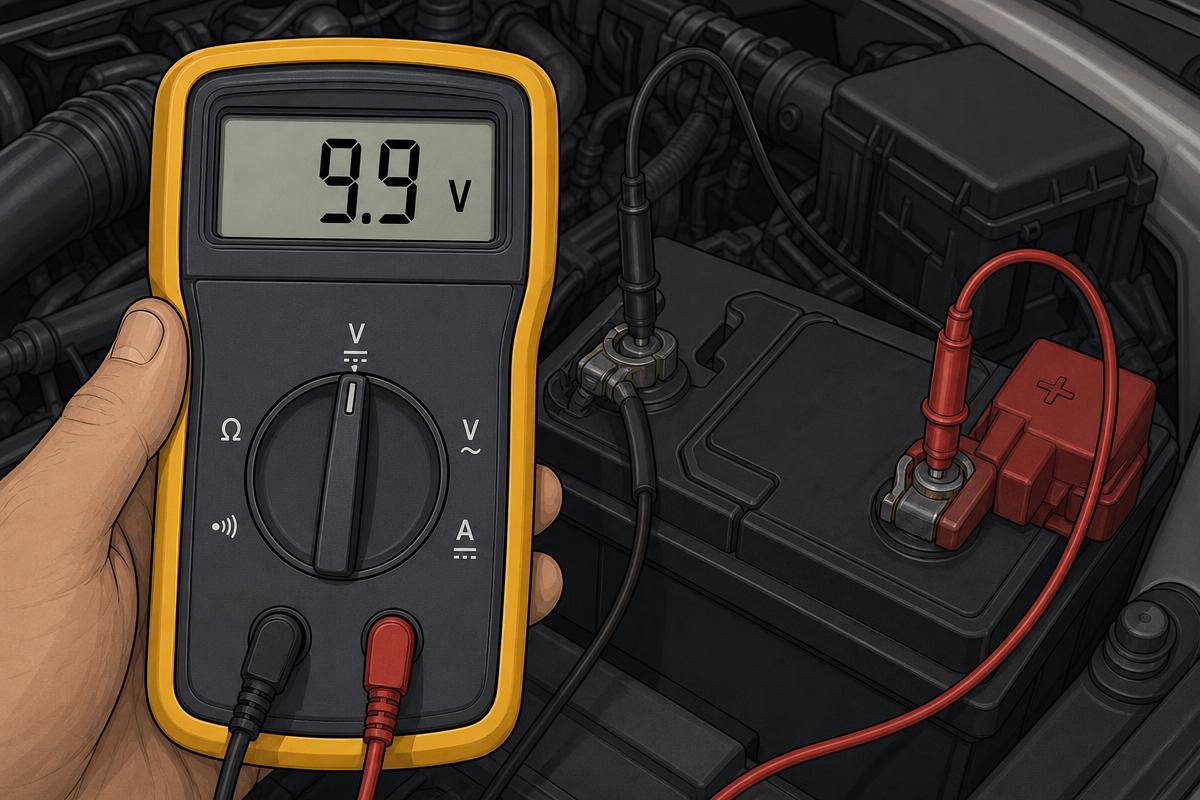
Step 1 · Make the battery safe to test
Bonnet propped, ignition off, eye protection on. Check the case for cracks, bulges or leaks — a damaged battery never gets load tested.
Tap the numbered markers on the picture for the exact contact points.
Batteries vent hydrogen. No sparks, no flames, no smoking over an open bonnet.
Procedure
- Record the resting voltage first — below 12.4 V, recharge and retest rather than condemning
- Clean both posts back to bright lead if there is any corrosion
- Clamp the tester directly to the posts, red to positive, black to negative
- Set the load to half the battery's cold cranking amps rating (a 500 CCA battery is loaded at 250 A)
- Apply the load for 10 seconds and watch the voltage the whole time
- Read the voltage at the 10-second mark, then release the load
- Let the battery recover for a minute and note how quickly it climbs back
Normal result
Voltage stays above 9.6 V at 21°C for the full 10 seconds and recovers above 12.4 V within a minute. The needle or display should settle rather than keep falling.
Fault result
Voltage falls below 9.6 V during the load, keeps sliding rather than settling, or recovers slowly to below 12.4 V.
Interpretation
IfHolds above 9.6 V and recovers quickly
ThenBattery has capacity — look elsewhere for the fault
NextMove to cranking voltage and starter current
IfFalls to between 9.0 V and 9.6 V
ThenMarginal battery; it will fail on the first cold morning
NextRecharge fully and retest; if it repeats, replace
IfCollapses below 9.0 V
ThenFailed cell or heavy sulphation — the battery cannot support the load
NextReplace the battery, then recheck the charging system that let it get there
IfFails cold but passes warm
ThenCapacity has dropped far enough that temperature decides the outcome
NextTreat as failed — see the cold performance check
IfVoltage is fine at the tester but poor at the starter
ThenThe battery is good; the cabling or connections are not
NextRun battery terminal drop and starter feed drop tests
Common mistakes
- Load testing a partially discharged battery and condemning it on the result
- Clamping onto the cable clamps instead of the posts
- Skipping surface-charge removal after a drive or a charger
- Ignoring temperature — the 9.6 V limit assumes roughly 21°C
- Holding the load far longer than 10 seconds and cooking the tester