Battery Terminal Voltage Drop
Isolates resistance between the battery post and its clamp under cranking load.
What this test tells you
When to use it
- Slow cranking with a battery that has passed a load or conductance test
- Any white or green corrosion around a terminal
- A car that starts after someone wiggles or retightens a terminal
- As the first step of a full starting-circuit voltage drop survey
Safety
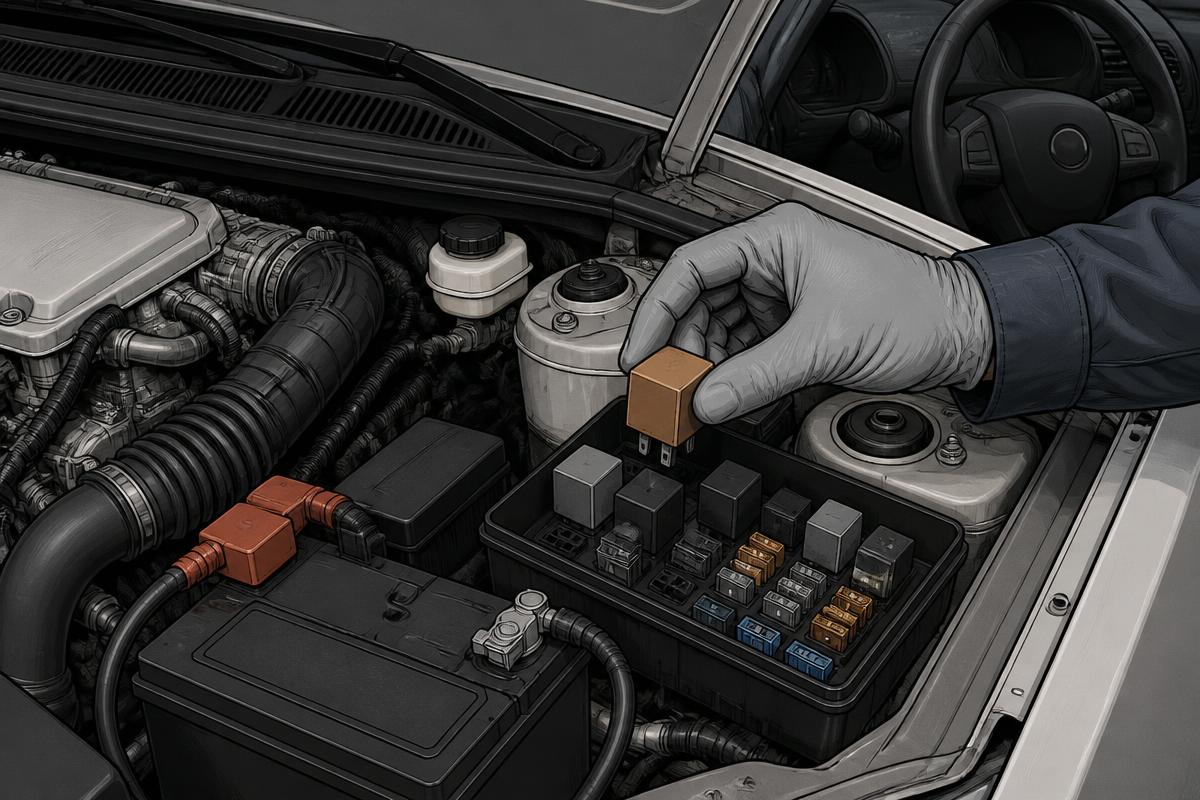
- Disable the engine before cranking: pull the fuel pump or injection relay
- Keep leads, sleeves and probes clear of belts and the cooling fan
- Never bridge positive to ground with a probe or spanner
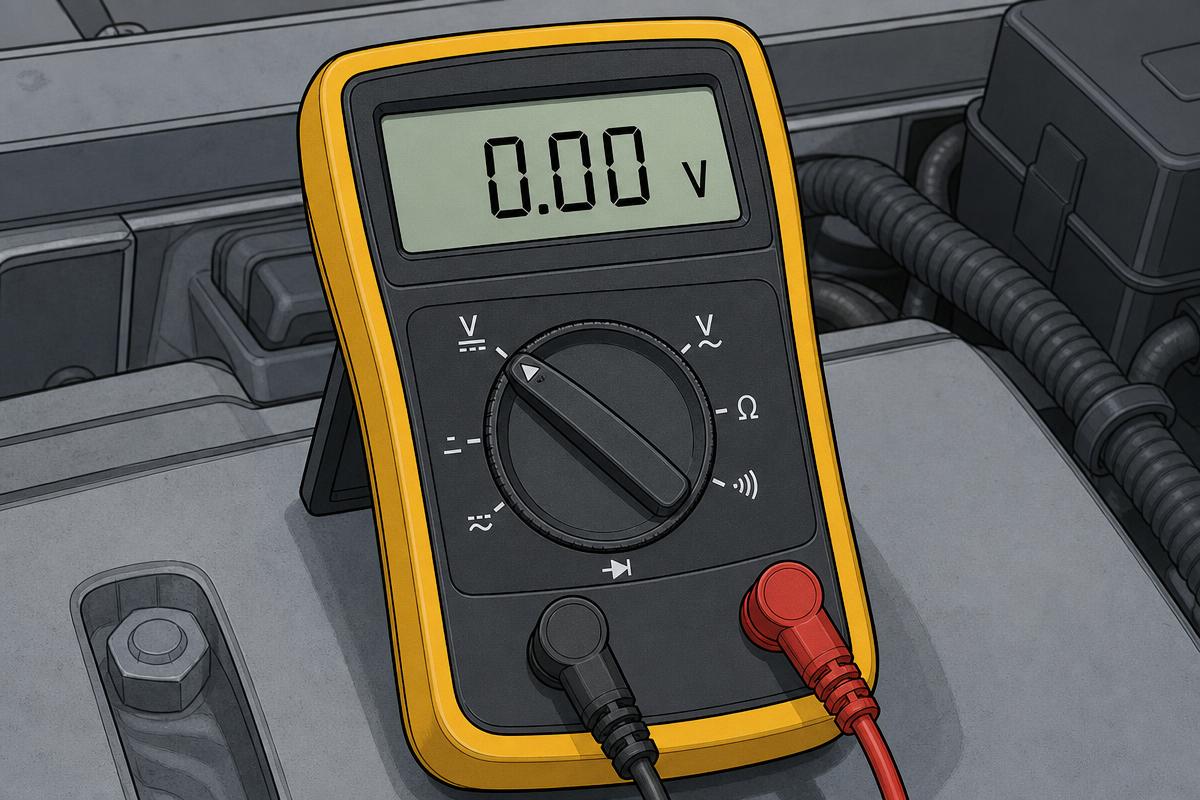
- Set the meter to volts before touching anything live
Vehicle setup
- Battery charged to at least 12.4 V — a flat battery makes every reading look bad
- Engine disabled so it cranks without starting
- Handbrake on, transmission in neutral or park
Meter setup
- Tool
- Digital multimeter
- Function
- DC volts
- Range
- Auto range, or the millivolt range — readings are hundredths of a volt
- Sockets
- Red in VΩ, black in COM
Probe placement
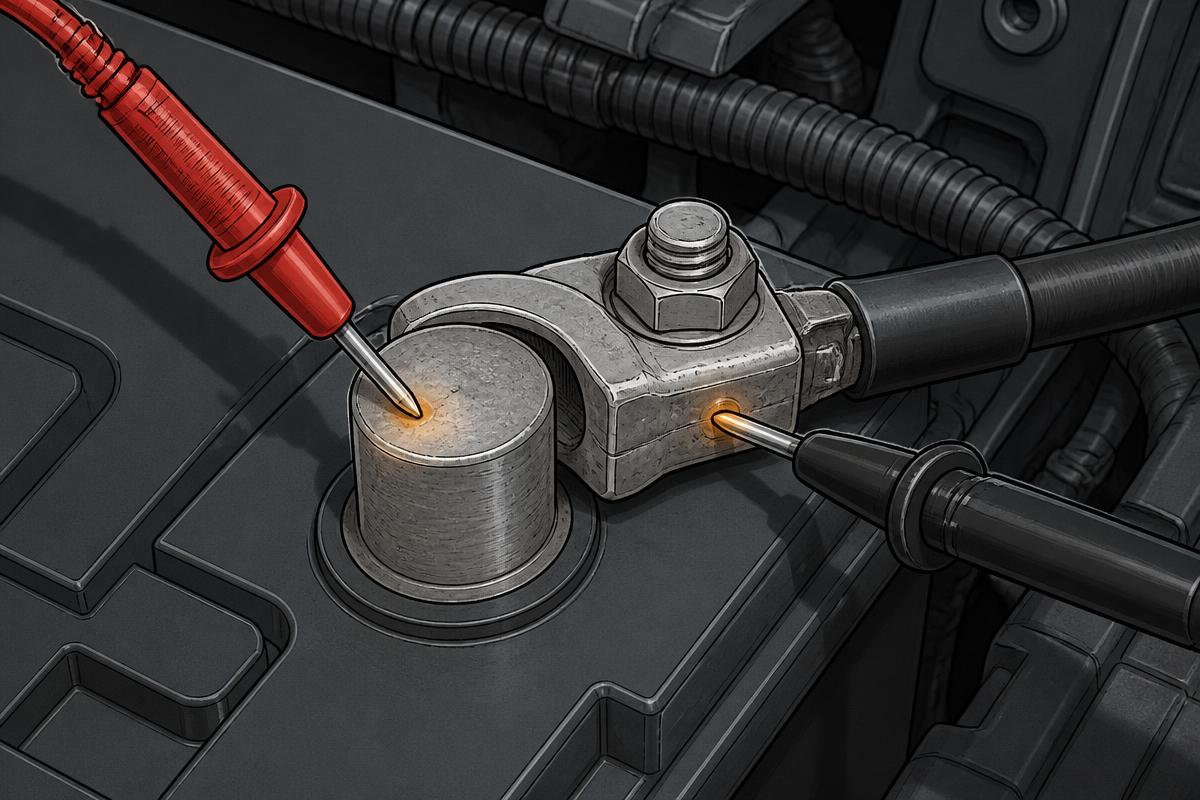
RED Bare lead of the positive post itself
BLACK Metal body of the positive cable clamp
Both probes on the same joint, only the joint between them
RED Metal body of the negative cable clamp
BLACK Bare lead of the negative post itself
Keeps polarity positive on the display for the ground side
Step by step
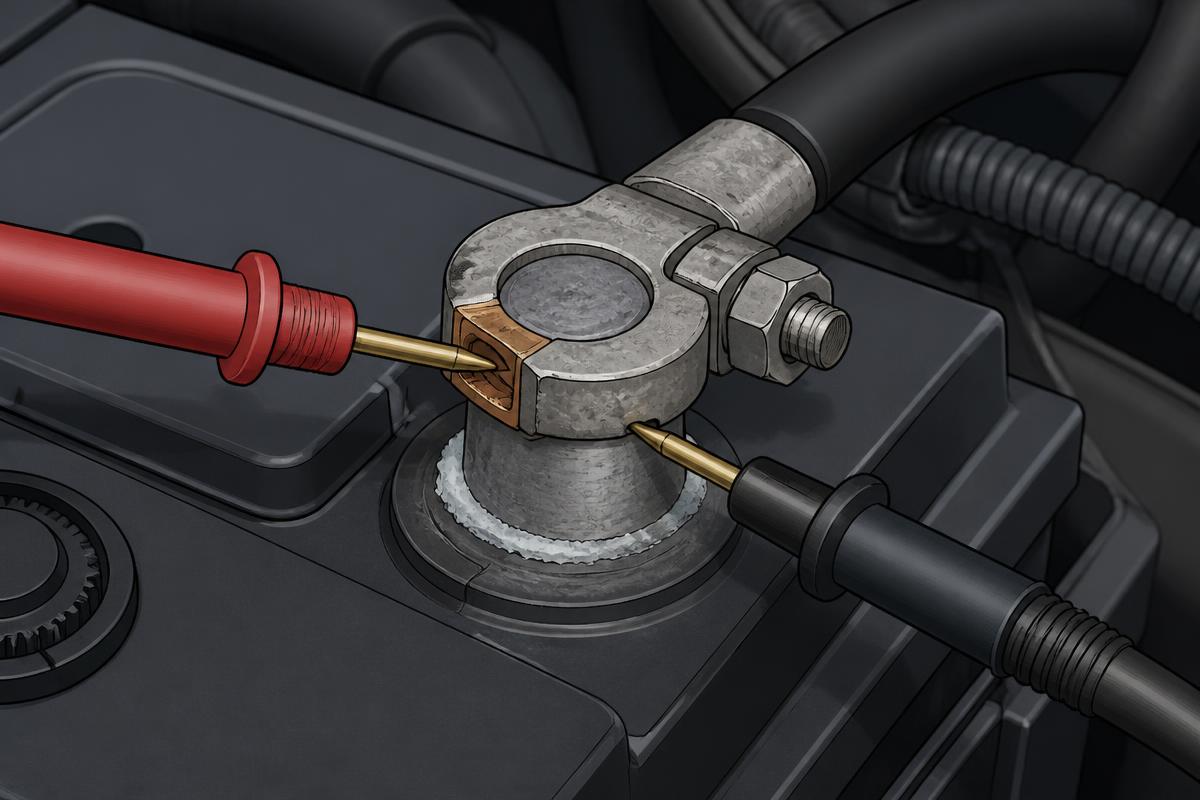
Step 1 · Disable the engine and set up
Pull the fuel pump or injection relay so the engine cranks without starting. Handbrake on, neutral or park, battery at 12.4 V or better.
Tap the numbered markers on the picture for the exact contact points.
Never crank with a probe or spanner able to bridge positive to ground.
Procedure
- Set the meter to DC volts and confirm it reads 0.00 V with the probes touching each other
- Place the red probe firmly on the bare positive post and the black probe on the positive clamp
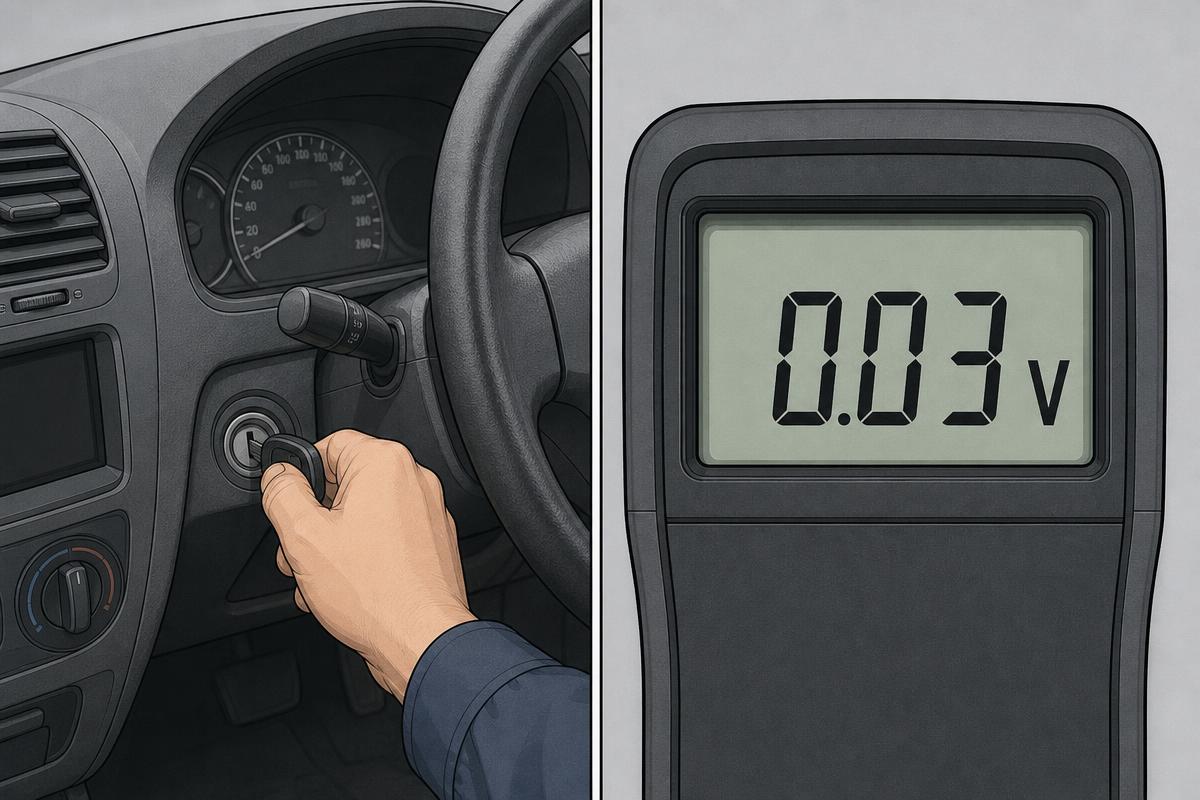
- Have an assistant crank the engine for a few seconds while you watch the display
- Record the highest reading seen during cranking, not the reading afterwards
- Repeat on the negative side, red on the clamp and black on the post
- If either joint is out of spec, remove, clean and refit that terminal and retest
- Retest after the repair — never assume cleaning has fixed it
Normal result
Under 0.05 V across each post-to-clamp joint while cranking. A good, clean, correctly tightened terminal is usually 0.01–0.03 V.
Fault result
Anything above 0.1 V across a single terminal joint. Readings of 0.3 V or more will cause visible cranking problems and heat the terminal.
Interpretation
IfBoth joints under 0.05 V
ThenTerminals are good — move further along the cable
NextTest the full feed and ground drops to the starter
IfPositive joint high
ThenCorrosion or a loose clamp on the positive post
NextRemove, clean both post and clamp to bright metal, refit and torque, then retest
IfNegative joint high
ThenSame fault on the ground side — often hidden under a rubber boot
NextClean and refit, then also check the body and engine earths
IfReading climbs the longer it cranks
ThenThe joint is heating and its resistance is rising with temperature
NextReplace the clamp; a heat-damaged terminal will not clean up reliably
IfReading is fine but cranking is still slow
ThenThe terminals are not the restriction
NextMove to starter feed drop, starter ground drop and starter current
Common mistakes
- Probing the clamp on both sides, which measures nothing but a piece of metal
- Testing with the ignition off and no current flowing — a corroded joint reads 0.00 V
- Reading the meter after cranking has stopped
- Cleaning the terminal before measuring, destroying the evidence and the result
- Accepting a low reading taken with a nearly flat battery that barely cranks