Cranking Voltage Test
Watches battery voltage while the engine cranks — the fastest way to separate a weak battery from a starting circuit fault.
What this test tells you
When to use it
- Slow or laboured cranking
- Intermittent no-start, particularly when cold
- Straight after confirming a healthy resting voltage
Safety
- Keep leads clear of the fan, belts and pulleys before cranking
- Make sure the vehicle is in neutral or park with the handbrake applied
- Warn anyone nearby before cranking
Vehicle setup
- Battery fully charged — otherwise the test only proves it is flat
- Engine at the temperature the fault occurs at, if possible
- Disable fuelling or ignition if you need extended cranking without starting
Meter setup
- Tool
- Digital multimeter
- Function
- DC volts, min/max recording if available
- Range
- Auto range or 20 V DC
- Sockets
- Red in VΩ, black in COM
Practise it — interactive simulation
Cranking voltage
Load the battery with the starter and watch what it holds.
- GND — Battery → BPOS
- BPOS — Starter positive cable → SOLB
- SOLB — Solenoid contacts → SOLM
- SOLM — Starter motor → SGND
- SGND — Engine earth strap → GND
Loading the interactive circuit…
RED Battery positive post
BLACK Battery negative post
Leave the probes on the posts throughout cranking and record the lowest value
Step by step
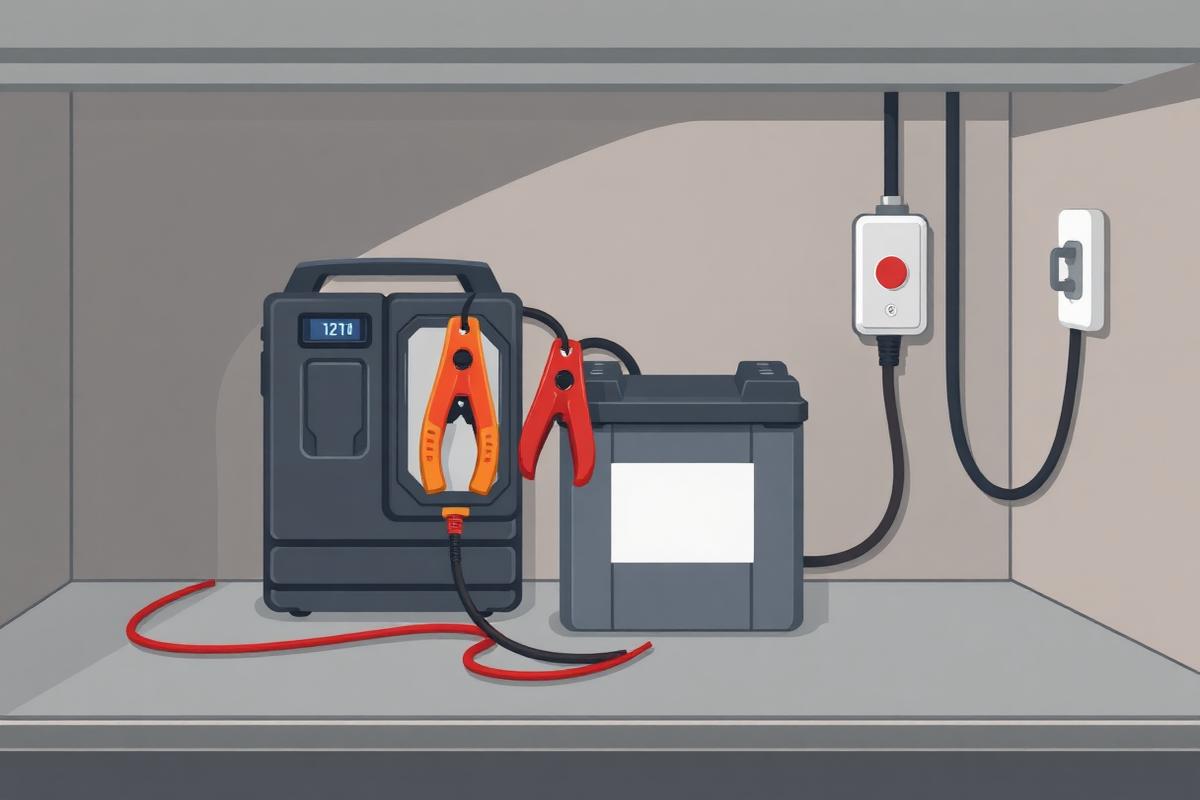
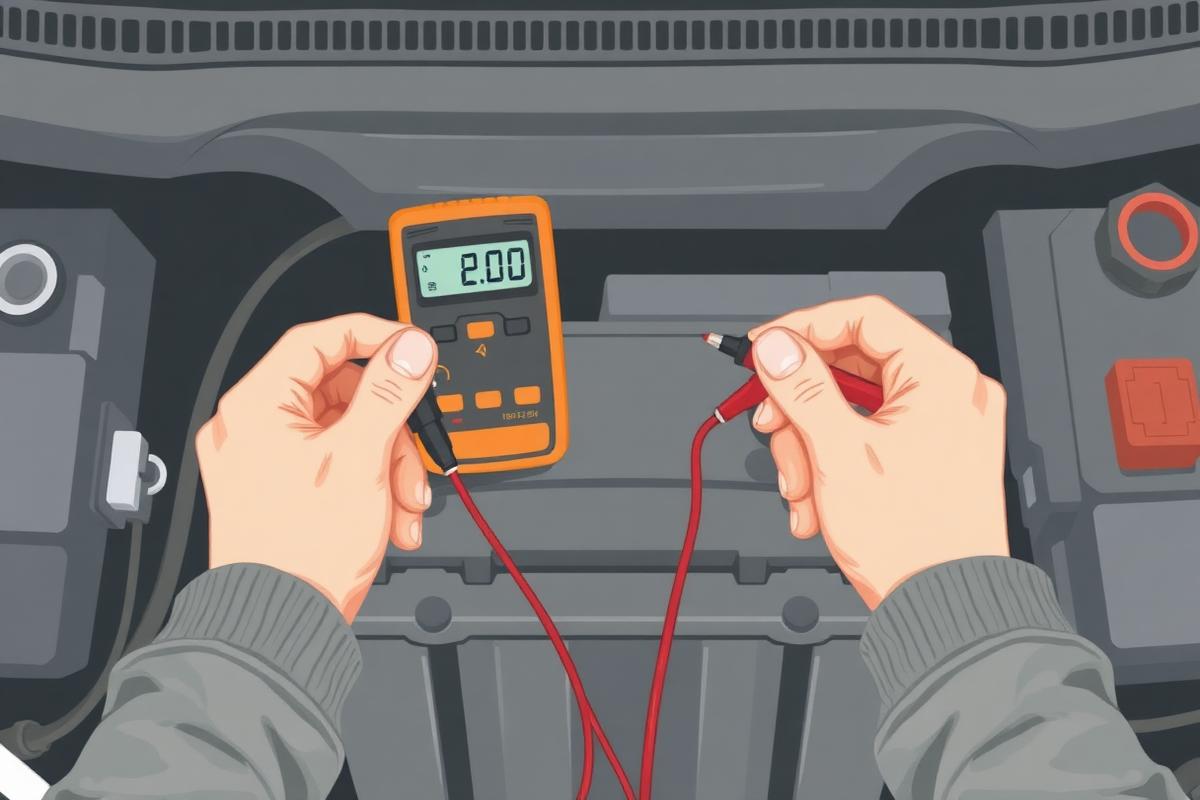
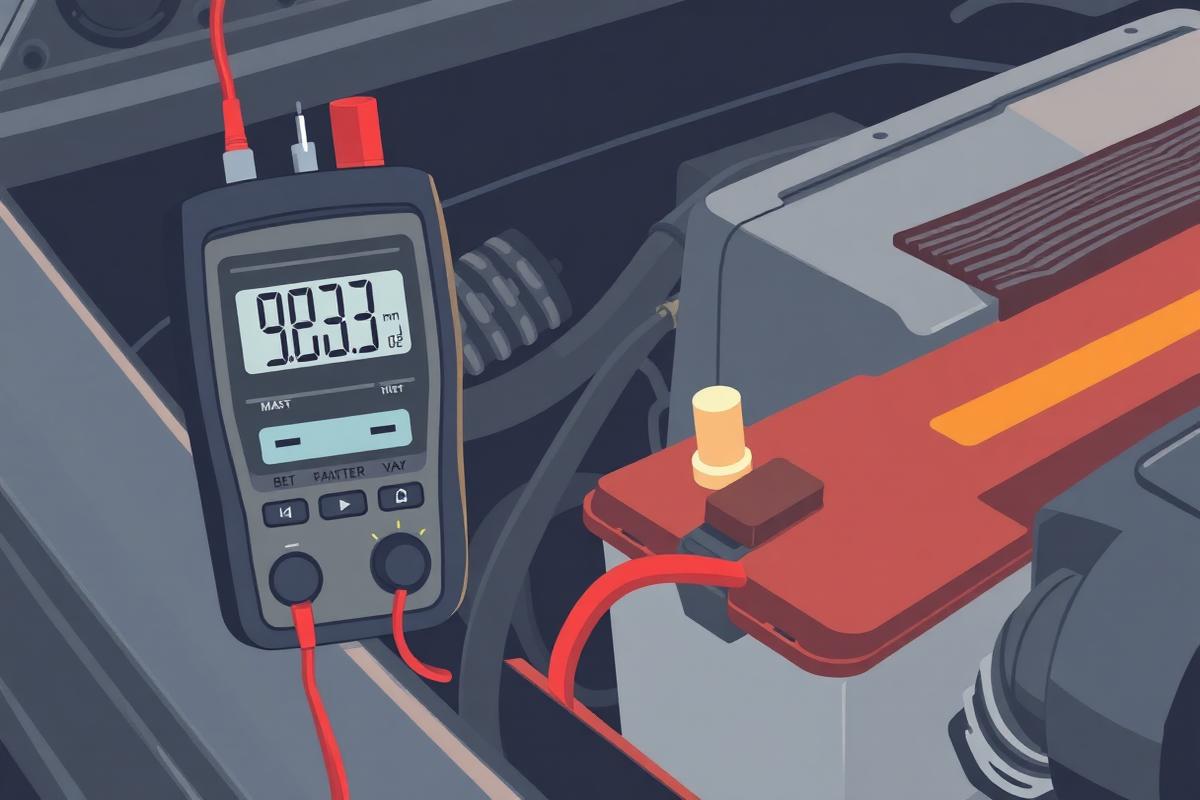
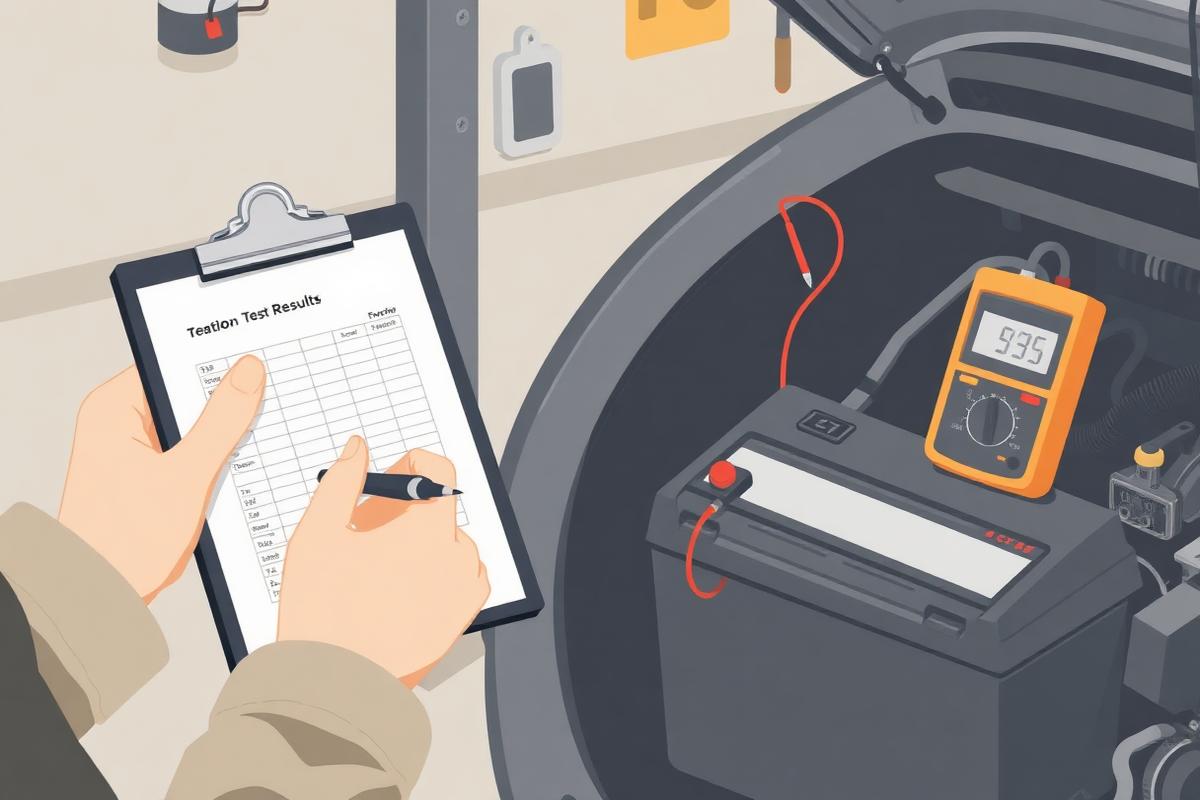
Step 1 · Charge first
Confirm the resting voltage is at least 12.4 V. Cranking figures taken on a flat battery mean nothing.
Procedure
- Record the resting voltage first
- Set the meter to min/max recording if it has it
- Place the probes firmly on the posts
- Crank the engine for around five seconds
- Read the lowest voltage reached during cranking
- Compare the drop from resting voltage to cranking voltage
Normal result
Above 9.6 V while cranking at around 20°C on a healthy battery, typically settling at 10 to 11 V. Colder ambient temperatures allow a lower figure.
Fault result
Below 9.6 V at normal temperature, or a battery that dives to 8 V or less and recovers immediately when cranking stops.
Interpretation
IfAbove 9.6 V but the engine still cranks slowly
ThenThe battery is holding up, so the problem is in the starting circuit or the starter itself
NextMove to voltage drop testing on the starter feed and ground, then starter current draw
IfBelow 9.6 V with a fully charged battery
ThenThe battery cannot deliver its rated current — capacity loss or internal resistance
NextConfirm with a capacity or conductance test, then replace
IfVoltage collapses to almost nothing with a single click
ThenEither a very high resistance connection or a seized engine or starter drawing excessive current
NextMeasure starter current draw before condemning the battery
IfVoltage stays high and nothing happens
ThenNo current is being drawn — the fault is in the control circuit or the starter is open
NextCheck the start signal at the solenoid
Common mistakes
- Testing on a partially discharged battery
- Reading the average instead of the lowest point
- Probing at the clamp so a bad clamp masks a good battery
- Ignoring ambient temperature when comparing to specification