Charging System Voltage Test
Measures regulated output at the battery with the engine running.
What this test tells you
When to use it
- Battery warning light on, flickering, or glowing dimly
- A battery that keeps going flat with no obvious drain
- Battery using water, smelling of acid, or a swollen case
- Straight after fitting a battery or alternator, to confirm the repair
Safety
- Keep leads, sleeves and hair clear of the belt, pulleys and cooling fan
- The fan can start without warning on a hot engine
- Never disconnect the battery with the engine running to 'test' the alternator — it destroys electronics
- Exhaust fumes: run the engine outside or on extraction
Vehicle setup
- Battery in good condition and charged — a flat battery drags the reading down and hides the truth
- Bonnet open, engine at idle, transmission in neutral or park with the handbrake on
- All accessories off for the baseline reading
Meter setup
- Tool
- Digital multimeter, crocodile clip leads preferred
- Function
- DC volts
- Range
- Auto range, or 20 V DC
- Sockets
- Red in VΩ, black in COM
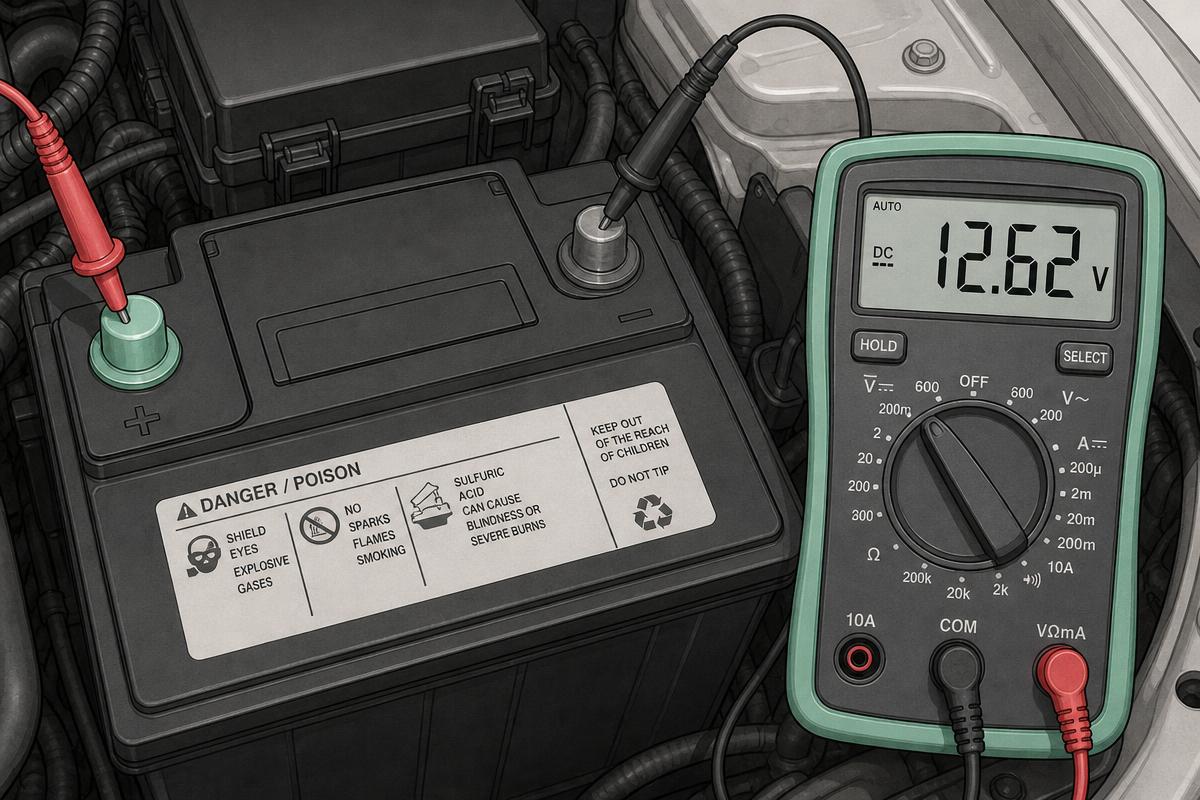
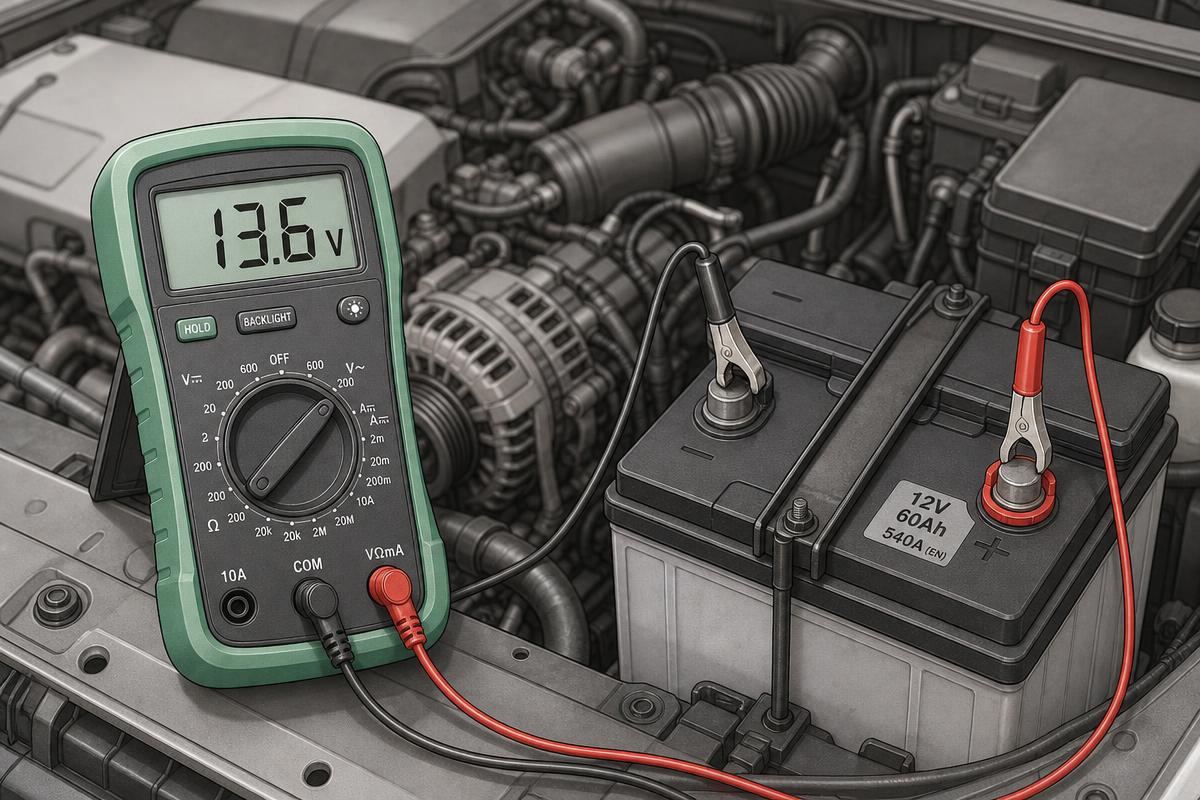
RED Battery positive post
BLACK Battery negative post
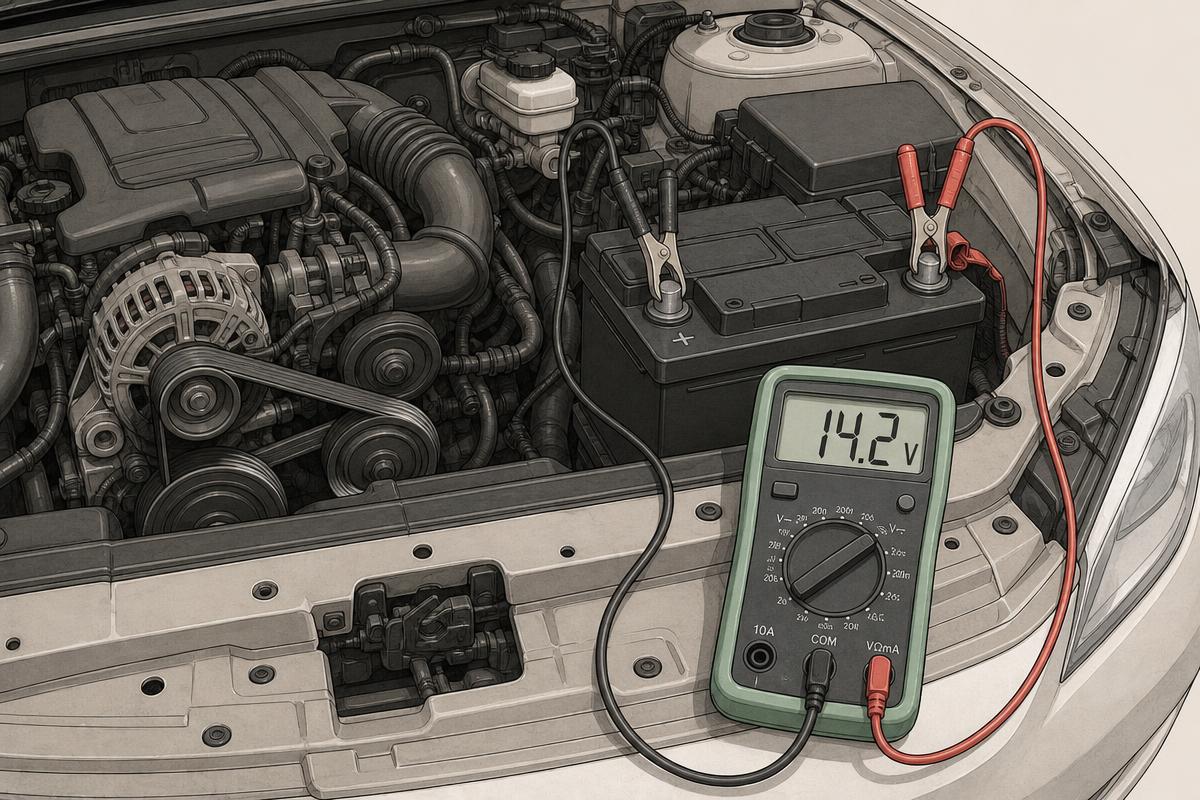
Measure at the battery, not at the alternator — this is what the vehicle actually receives
RED Alternator B+ output stud
BLACK Alternator casing
Only for comparison; a big difference between here and the battery means cable drop
Step by step
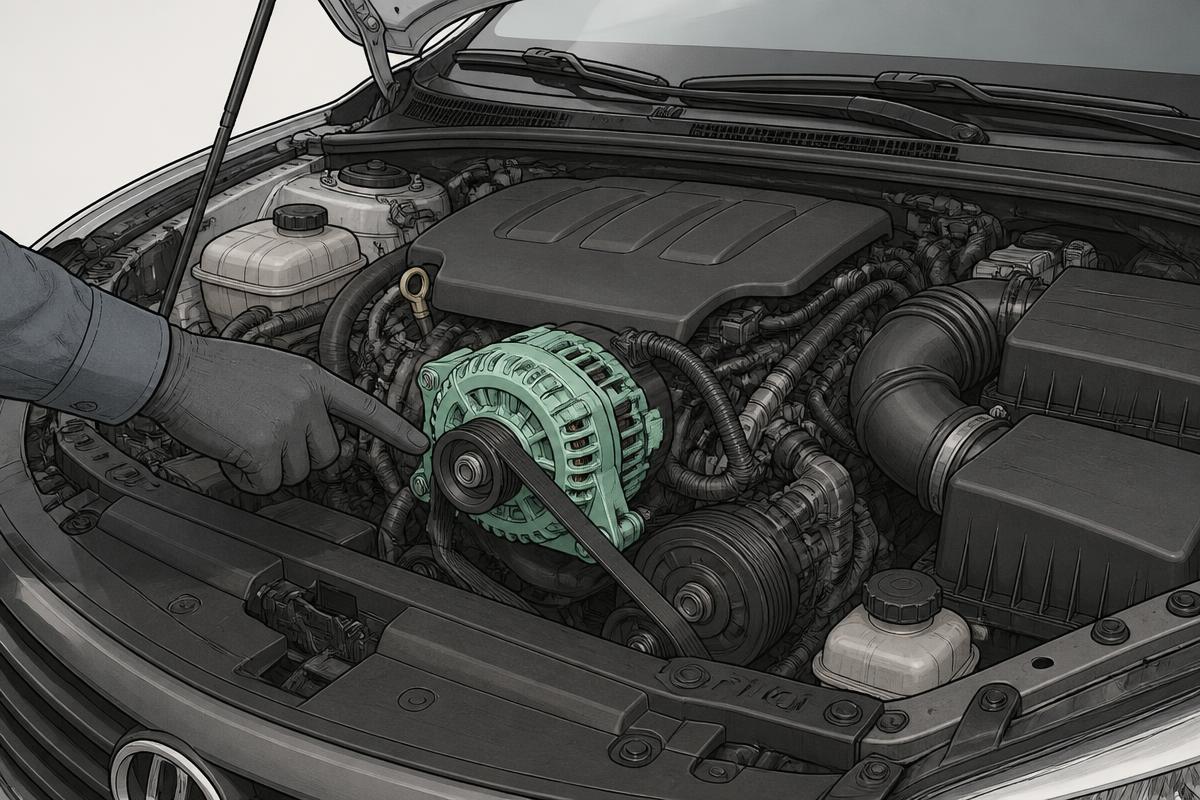
Step 1 · Find the alternator and check the belt
Bonnet propped, engine off. Locate the alternator and check the drive belt for glazing, cracks or slack — a slipping belt fails every charging test that follows.
Tap the numbered markers on the picture for the exact contact points.
Engine off for this step. Never check belt tension with the engine running.
Procedure
- Engine off, record the resting voltage at the battery — you need a baseline
- Start the engine and let it settle to idle
- Read the voltage at the battery again with nothing switched on
- Hold around 2000 rpm for fifteen seconds and note the voltage
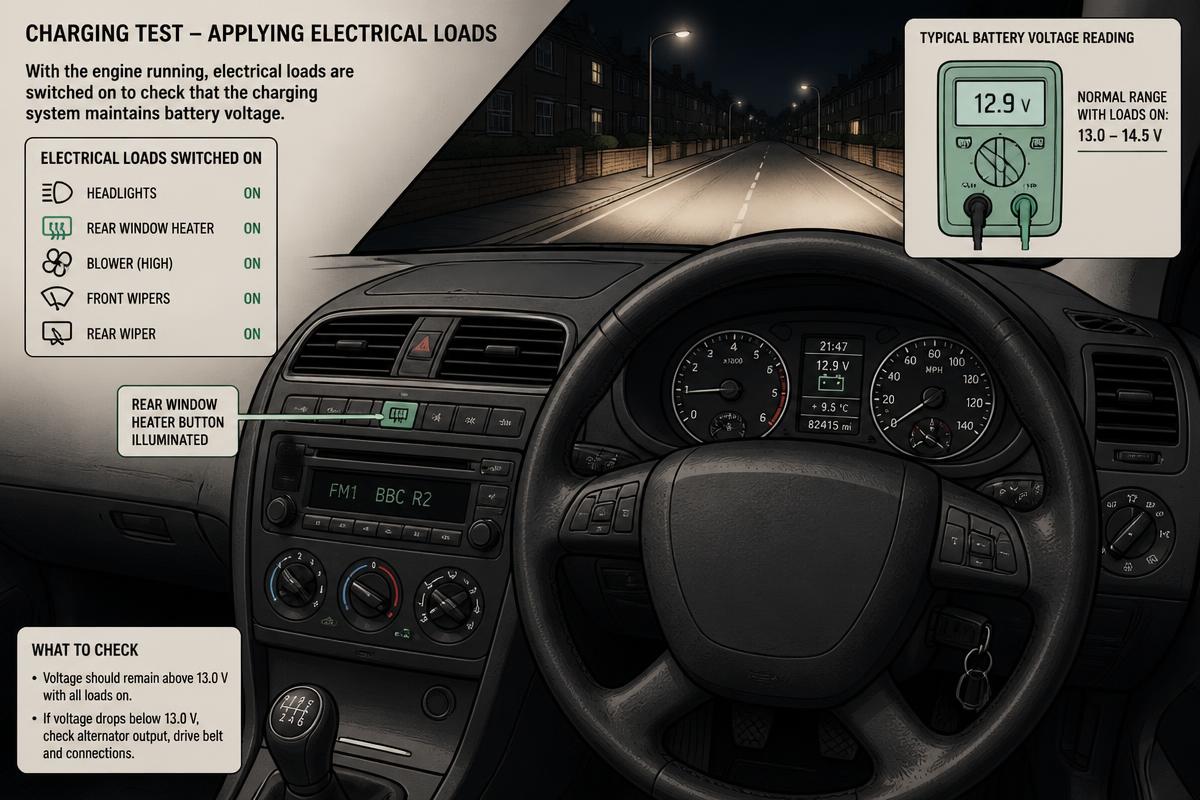
- Switch on headlights, blower on full, heated rear screen and wipers
- Read the loaded voltage at idle and again at 2000 rpm
- Compare all four figures against the resting voltage you started with
Normal result
13.5–14.8 V at the battery with the engine running, rising above the resting figure. Under load it should stay above 13.0 V. On a smart-charging vehicle a deliberately lower figure of 12.5–13.2 V is normal at times and is not a fault on its own.
Fault result
Below 13.0 V unloaded (undercharging) or above 15.0 V at any point (overcharging). No rise at all above resting voltage means the alternator is not contributing.
Interpretation
If13.5–14.8 V, steady, holds above 13.0 V under load
ThenCharging output is correct
NextIf the battery still goes flat, test parasitic drain
IfBarely above resting voltage, or no rise at all
ThenAlternator is not charging — belt, field supply, regulator or the alternator itself
NextCheck the belt, then output current and the charging circuit drop
If13.0–13.4 V and never higher
ThenUndercharging; may be cable drop rather than the alternator
NextMeasure at the alternator B+ and compare — run the charging circuit drop test
IfAbove 15.0 V
ThenRegulator has failed high; the battery is being cooked
NextReplace the regulator or alternator before the battery is ruined
IfVoltage swings up and down on its own
ThenEither smart charging doing its job, or a failing regulator
NextCompare against scan data — run the smart charging control check
Common mistakes
- Testing with a flat battery, which holds the voltage down and looks like an alternator fault
- Measuring at the alternator only, so cable drop is never noticed
- Judging a smart-charging vehicle by the old 14.4 V rule
- Reading only at idle, where output is lowest
- Disconnecting the battery while running as a shortcut test