Cold Performance Check
Compares cranking behaviour cold versus warm to expose marginal capacity.
What this test tells you
When to use it
- The car will not start first thing but starts perfectly by the time it reaches you
- Battery passes every test in the workshop yet keeps coming back
- Autumn checks before winter, especially on stop-start vehicles
- Deciding between a marginal battery and a genuine starter or drain fault
Safety
- Working outside in the cold — mind icy ground and keep leads out of the way
- Disable the engine only if you intend to crank without starting
- Keep clear of the cooling fan, which can run on after a warm test
- Never attempt to test or charge a battery whose electrolyte has frozen
Vehicle setup
- First measurement taken cold soaked — the car left overnight, not driven
- Second measurement taken with the engine bay warm after a run
- Nothing charged or jump-started in between, or the comparison is worthless
Meter setup
- Tool
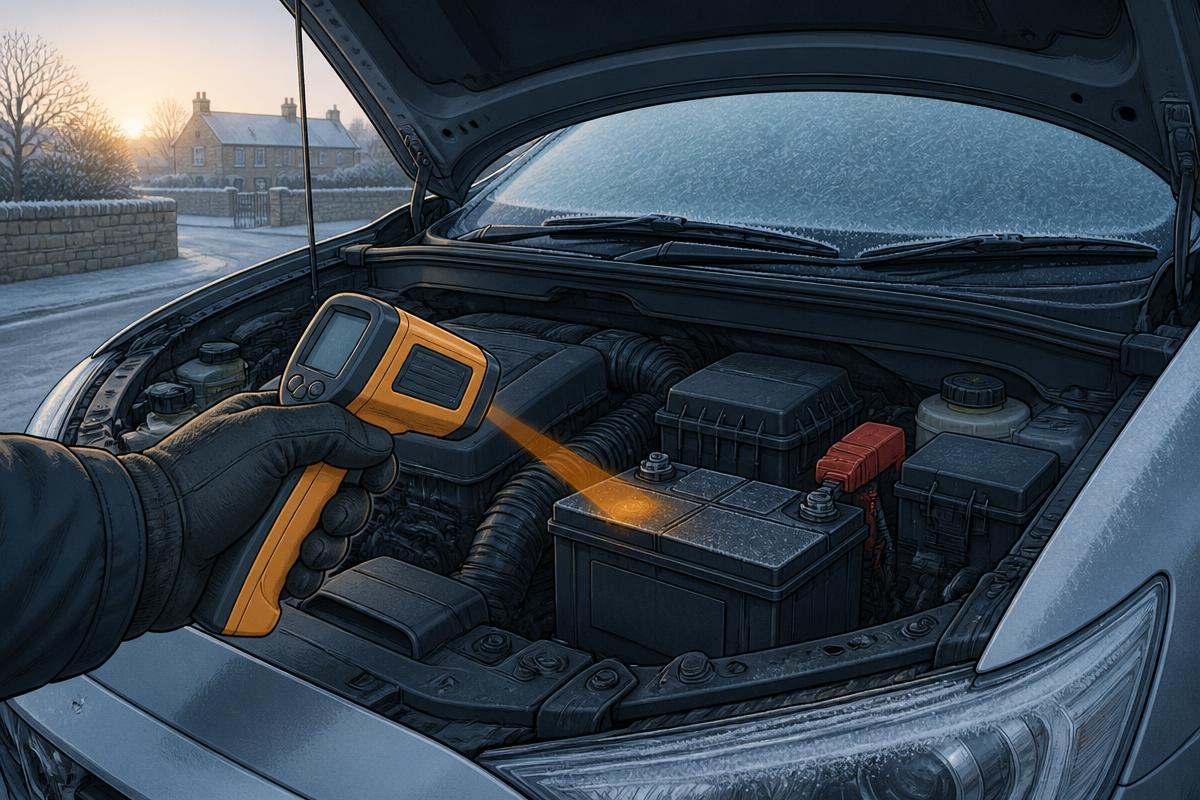
- Digital multimeter with crocodile clip leads, plus an infrared thermometer
- Function
- DC volts, min/max recording if the meter offers it
- Range
- Auto range, or 20 V DC
- Sockets
- Red in VΩ, black in COM
Probe placement
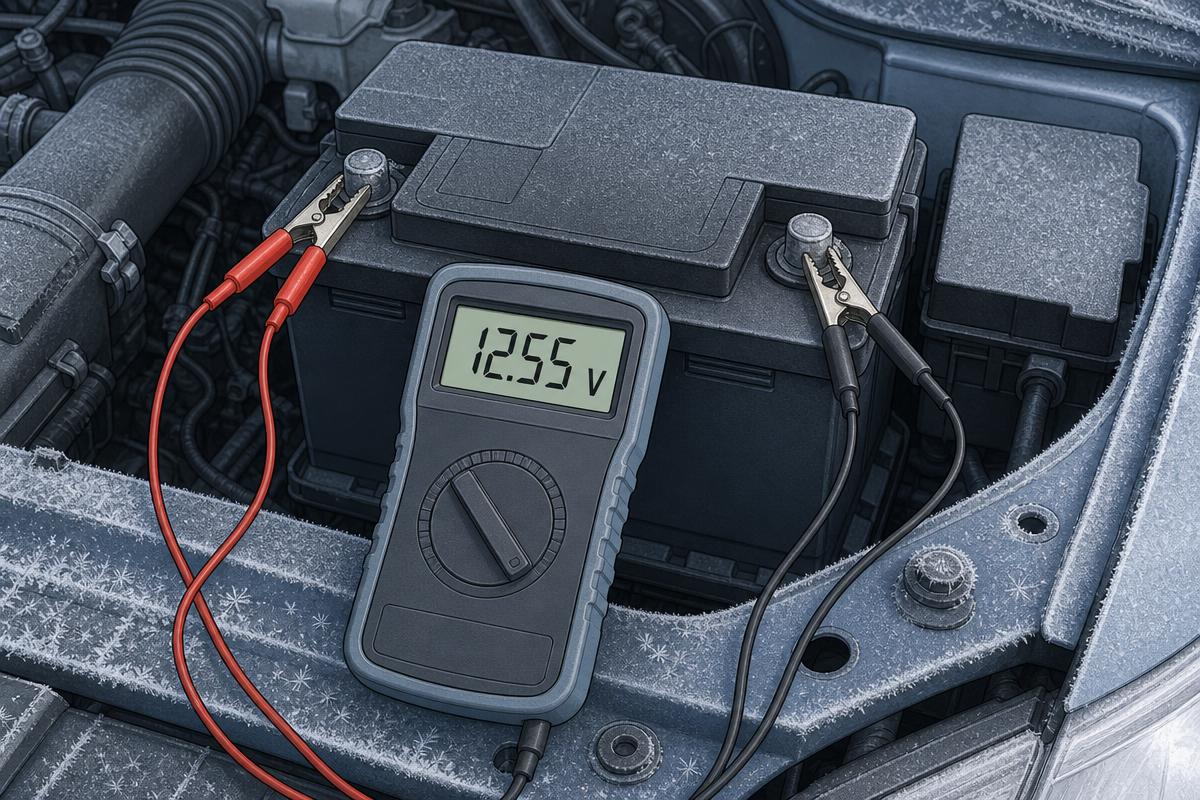
RED Crocodile clip on the positive post
BLACK Crocodile clip on the negative post
Clips leave your hands free and hold contact through the whole crank
Step by step
Step 1 · Start cold — do not touch anything first
The vehicle must have stood at least eight hours. No jump pack, no charger, no quick run round the block, or the comparison is worthless.
Tap the numbered markers on the picture for the exact contact points.
Never test or charge a battery whose electrolyte has frozen.
Procedure
- Cold, before anything is switched on: measure the battery case temperature with the infrared thermometer
- Record the resting voltage cold, after the car has stood at least eight hours
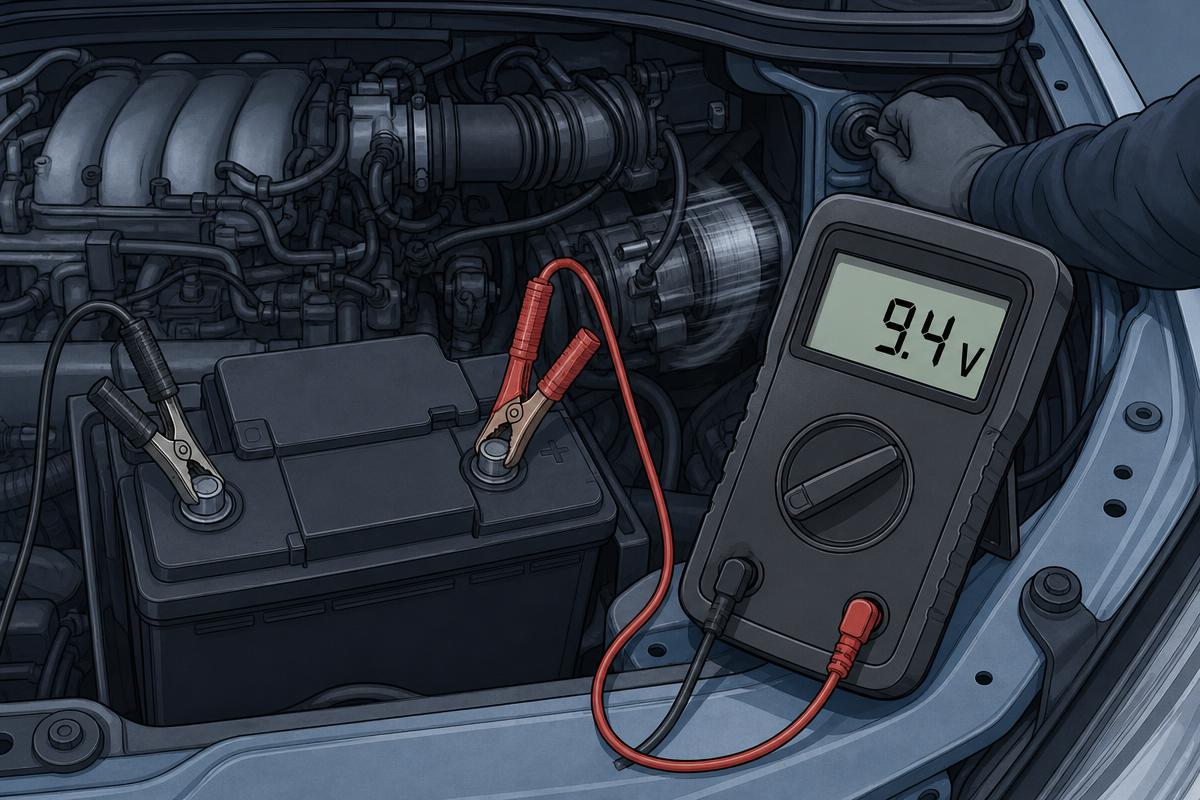
- Clip the meter on, set min/max recording, and crank the engine
- Record the lowest voltage reached during the cold crank and how long cranking lasted
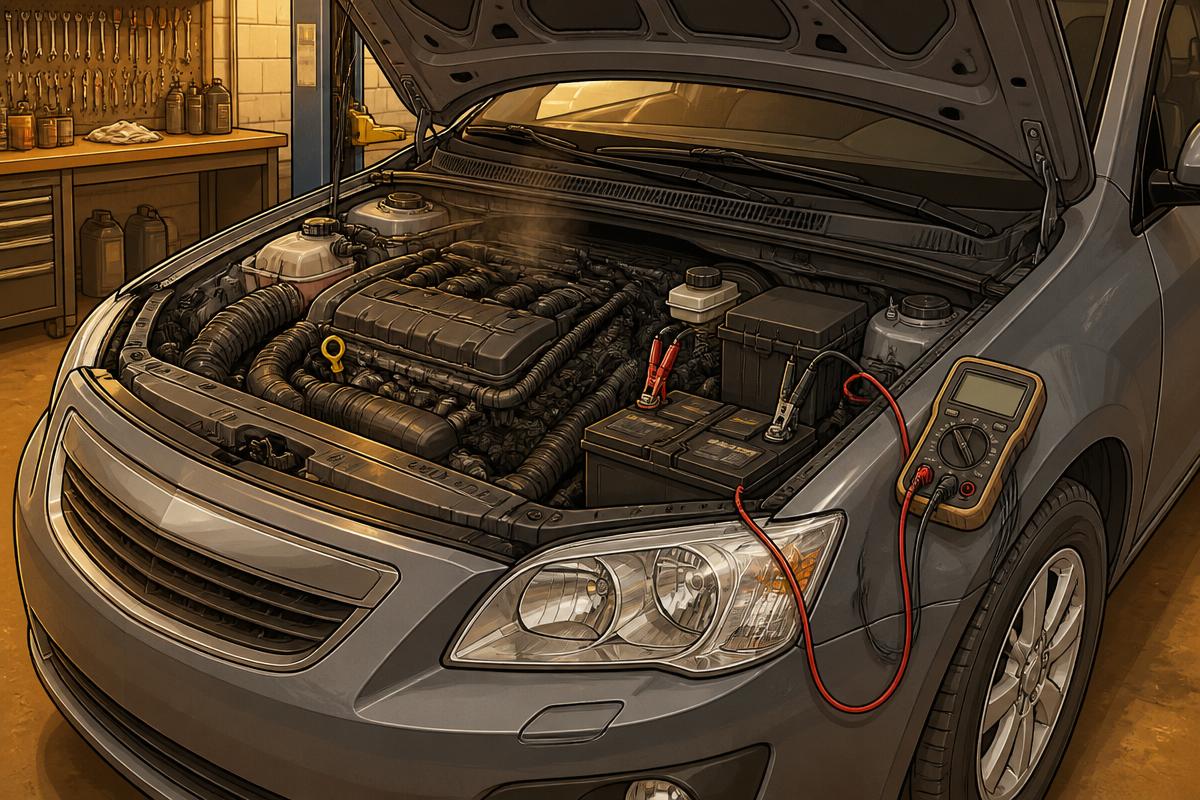
- Run the vehicle up to temperature or leave it in a warm workshop for an hour
- Repeat the resting and cranking measurements warm, with the same meter and clips
- Compare the two cranking figures and the two temperatures side by side
Normal result
Cranking voltage stays above 9.6 V both cold and warm, with only a small difference between them. A healthy battery loses roughly 20% of its cranking capability at 0°C and around 35% at −18°C, which should still leave plenty of margin.
Fault result
Cold cranking voltage below 9.6 V while the warm figure passes, a large gap between cold and warm readings, or noticeably longer cranking when cold.
Interpretation
IfCold and warm both above 9.6 V, similar figures
ThenBattery has real capacity in reserve
NextInvestigate the drain, the starter or the fuel and ignition side instead
IfWarm passes, cold falls below 9.6 V
ThenMarginal capacity — the fault is temperature dependent, exactly as described
NextReplace the battery; a workshop test alone would have passed it
IfBoth fail
ThenThe battery is simply finished, regardless of weather
NextReplace, then check charging voltage and drain to find the cause
IfCold resting voltage much lower than warm resting voltage
ThenSomething is discharging the battery overnight
NextRun the parasitic drain test
IfCranking is slow cold but voltage stays high
ThenNot a capacity fault — resistance in the cabling or a dragging starter
NextRun the terminal, feed and ground drop tests, then starter current
Common mistakes
- Testing warm only and telling the customer nothing is wrong
- Charging the battery before the cold test and destroying the evidence
- Not recording temperature, which makes the two results impossible to compare properly
- Blaming the battery when the real fault is an overnight drain
- Comparing a cold crank on a cold engine with a warm crank on a warm engine and ignoring that thicker oil also slows cranking